KONY 2012 from INVISIBLE CHILDREN on Vimeo.
Please visit website below for more information, to sign the petition and donate.www.kony2012.com

March 12th, 2012 — Charity, Political, Video
KONY 2012 from INVISIBLE CHILDREN on Vimeo.
Please visit website below for more information, to sign the petition and donate.August 5th, 2011 — Advice, Domestic Goddess, Etiquette, Tips
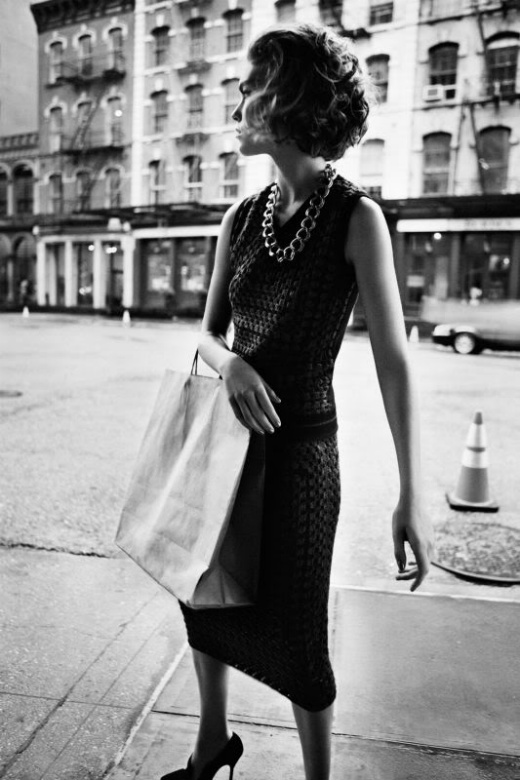
A lady always shows respect and consideration for others while placing a premium on honesty and graciousness. A lady also knows how her individual choices may affect others and how easy it is to choose words and actions more wisely. If you missed out on cotillion as a child, I think it best to invest in an etiquette book. ‘Emily Post’s Book of Etiquette’ is great to look up and source any question you might have and a perfect addition to any Lady’s Library. In the meantime here are my top 10 tips for being a lady in modern day society. - Taryn Cox for THE WIFE.
1. Follow Through – Nobody likes a flaky person. Regardless of how busy your life has become with commitments to your Husband and Children, you should never agree to take on more than you can handle i.e.… rsvp-ing to events, lunches with friends or other engagements. When receiving an invitation, contemplate if you’ll be exhausted from a busy day and politely decline. Many people re-arrange their schedules and look forward to plans and get upset with last minute cancellations. If a cancellation is necessary, be sincere in your apology and reschedule as soon as possible.
2. Phone Etiquette – Calls should only be placed between the hours of 9:00am – 10:00pm. Try to make a habit of returning calls within 24 hours of getting the message. When taking calls on your cell phone do consider other around you, keep conversations short and never discuss private matters in public. Your cell phone should remain in your purse and never be taken out during a meal. If need be excuse yourself from the table to check in with babysitters or any other emergencies. When in theatres or performances turn your phone to silent or off and avoid texting. Texting is extremely rude when in the presence of others.
3. Dressing Like a Lady – A lady always leaves something to the imagination, which is why one should choose to show a little leg or instead decide to accentuate your décolletage. When sitting down always cross your legs or ankles to avoid nearby peeping toms; it’s also important to practice getting in and out of cars without flashing the valet. (How to get out of a car without showing your knickers) Take the time to learn which dress codes are appropriate for certain occasions, for example if your invitation calls for “Cocktail Attire”, “Black Tie” or “White Tie,” would you know what is appropriate to wear? (Dress Code Guide)
4. It’s The Little Things – When a guest enters your home, do you offer them a glass of water or beverage of their choice? When arranging for a dinner party, do you remember if one of your dinner guests has a gluten allergy? When selecting a gift, is it something your friend mentioned they wanted? Just as a gentlemen would offer his coat if you were showing signs of being cold is how you should pay attention to small details. It’s a great way to show the people around you how much you care and are listening. Go the distance to make the people in your life feel incredibly special.
5. Always The Gracious Guest – Whether you have been invited over to a someone’s home for a dinner party, movie screening or cocktails, Never show up without a hostess gift. The gesture can be as small as a bottle of wine or dessert to as grand as having a flower arrangement delivered.
May 13th, 2011 — About Me, Video
I find it shocking that a news station doesn’t fact check before airing a story to the public… So here a few corrections they got wrong in the segment above…
March 30th, 2011 — About Me, Video
Monday Sophie and I took Lily and 3 of her friends on a Disneyland Adventure. Sophie was unofficially named best dressed women at the theme park, Lily and Erin rode Space Mountain their very first roller coaster (So Proud!) and with no melt downs or tantrums is was a wonderful day at the happiest place on earth! - Taryn Cox for THE WIFE.
February 11th, 2011 — Health, Resturants, Things I Love

I recently Discovered Beverly Hills Juice Company through a friend and have been going daily for the most delicious fresh pressed juice. I’m addicted to “The Big Ten” (Carrot, Beet, Celery, Kale, Spinach and Parsley) but since recently getting sick have been getting Apple Lemon Double Ginger, which was a terrific remedy. A bottle of juice will run you around 5.00 and is worth every penny.
In his quest to make the most nutritionally beneficial juice, David Otto became versed in the advantages of juicing with a hydraulic press. To press juice, fruits or vegetables are first ground into a fine pulp, wrapped in cloth bags, and then squeezed at a very high pressure by the hydraulic press. Compared to other methods of juice extraction, pressed juice has a higher nutritional content: more vitamins, more minerals, and more amino acids. Additionally, pressed juice is exposed to a minimal amount of oxidation, and therefore maintains a shelf life of a few days instead of minutes. Beverly Hills Juice presses and bottles batches of juice every morning, making pressed juice available for customers to pickup each day.
Beverly Hills Juice supports local, organic agriculture. They adapt their menu to the seasons and source most of their ingredients from local farms. They purchase the majority of our produce at farmer’s markets, where the average farmer travels 150 miles to bring her crop to market. Coconuts, bananas, ginger and cinnamon are not typically grown in California, and are sourced from organic suppliers.
Since 1975, Beverly Hills Juice has operated under a strong ethical code that promotes a healthy and balanced way of life. Their appreciation and gratitude for the earth is reflected in everything that they do. Beverly Hills Juice continually searches for the best practices that will limit their environmental impact, decrease their use of petroleum-based products, and contribute to the regeneration of the earth’s polluted resources. Some of their sustainable business practices include: Cups and Straws made from Sugar Cane Fiber, They do use bags to encourage customers to bring their own, all deliveries are made with a volkswagen TDI clean diesel car, all paper used is 100 recycled processed chlorine free and all waste generated is commercially composted.
Beverly Hills Juice 8382 Beverly Blvd Los Angeles, CA 90048 323 655 8300 www.BeverlyHillsJuice.ComOctober 18th, 2010 — Art and Culture, Halloween, The Social Butterfly

Now in its sixth year, the consistently sold-out Muse Costume Ball attracts more than 1,000 costume-clad revelers to the museum for a night filled with tricks and treats. Enjoy live music and video projections in the BP Grand Entrance and an exclusive preview of William Eggleston: Democratic Camera, Photograph, and Video, 1961-2008 along with after-hours access to Fashioning Fashion: European Dress in Detail, 1700-1925, Olmec: Colossal Masterworks of Ancient Mexico, and Eye for the Sensual: Selections from the Resnick Collection. The party continues in the LACMA West Penthouse with DJs, art installations, and the annual costume contest. Get ready to compete for Best American Icon, Most Fashionably Fashionable, and Best Halloween Costume with the winners taking home fabulous prizes.
Includes complimentary drinks by Malibu Family Wines, Effen Vodka, Hornitos Tequila, Dekuyper, Pernod Absinthe, FIJI Water, and more.
Tickets: $25 Muse Members | $50 General Public. Ticket includes admission, complimentary drinks, and parking. On sale now. Purchase tickets by clicking here, calling 323 857-6010, or in-person at LACMA’s Ticket Offices. Please note: $2 convenience fee per ticket added to all phone and internet orders.
Muse Costume Ball Saturday, October 30, 2010 8:30 pm - 12:30 amSeptember 24th, 2010 — Films, Kids, Political, Video

Documentary filmmaker Davis Guggenheim explores the tragic ways in which the American public education system is failing our nation’s children, and explores the roles that charter schools and education reformers could play in offering hope for the future. We see the statistics every day — students dropping out, science and math scores falling, and schools closing due to lack of funding. What we don’t see are the names and faces of the children whose entire futures are at stake due to our own inability to enact change. There was a time when the American public education system was a model admired by the entire world. Today other countries are surpassing us in every respect, and the slogan “No Child Left Behind” has become a cynical punch line. The Film Documents Bianca, Emily, Anthony, Daisy, and Francisco who are five students who deserve better. By investigating how the current system is actually obstructing their education instead of bolstering it, Guggenheim opens the door to considering possible options for transformation and improvement. ~ Jason Buchanan, Rovi
For More Information or to Make a Pledge Please Visit: www.WaitingForSuperman.Com In Theaters September 24th
August 4th, 2010 — The Husband, Things I Love
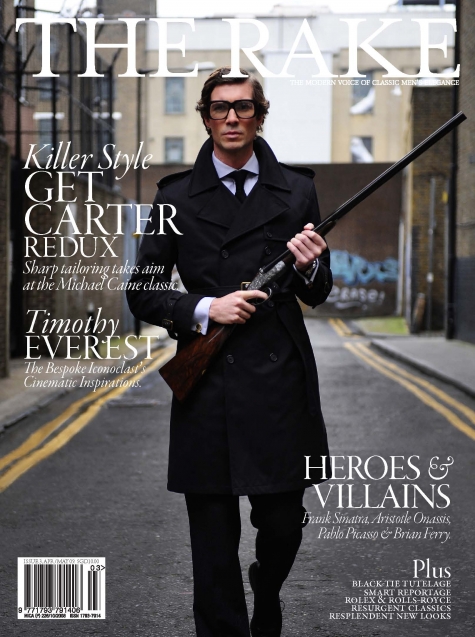
At once responding to and actively promoting a renaissance in gentlemanly sophistication and style, The Rake meets the needs of a disenfranchised, elite (yet expansive) sector of the male population – one seeking to recapture the codes of classic men’s elegance.
Catering to the reader alienated by ‘edgy’ men’s fashion magazines and insufficiently served by major male lifestyle titles, The Rake is aimed at the mature-minded gent who draws his sartorial inspiration from icons such as Cary Grant, Fred Astaire, the Duke of Windsor, Gianni Agnelli and Sean Connery, and their contemporary counterparts.
The Rake’s priority is to provide a precise framework for classically elegant dressing. The magazine spells out, in exquisite detail, the ground-rules for grand, flattering dressing…and then explains how and when those rules may be broken.
Though clothing is central to the magazine’s vision, it is The Rake’s firm belief that true elegance comes from within. Thus, our goal is to not only provide readers with informative, incisive, in-depth commentary on matters of attire, but also, the many elements of gentlemanly conduct and living. From manners and ethics, to art and design, tasteful travel, health and well-being, the intellectual and philosophical, to homes, modes of transport, entertainment, food and drink, The Rake’s purview encompasses the full spectrum of elegant living.
August 2nd, 2010 — Article, Eco Friendlly, The Husband, Wedding
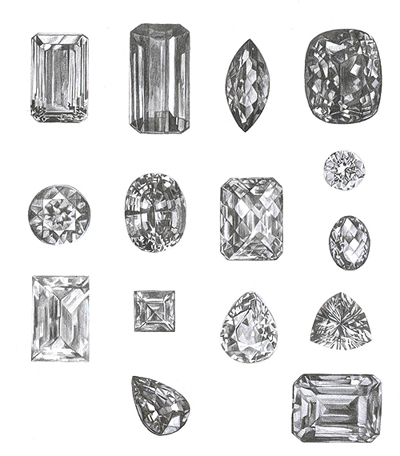
Conflict diamonds, sometimes called blood diamonds, are diamonds that are sold to fund the unlawful and illegal operations of rebel, military and terrorist groups. Countries that have been most affected by conflict diamonds are Sierra Leone, Angola, Liberia and the Democratic Republic of Congo — all places where citizens have been terrorized, mutilated and killed by groups in control of the local diamond trade.
Wars in most of those areas have ended or at least decreased in intensity, but conflict diamonds from Côte d’Ivoire, in West Africa, and Liberia are still reaching the trade labeled as conflict-free diamonds.
In 2000, South African countries with a legitimate diamond trade began a campaign to track the origins of all rough diamonds, attempting to put a stop to blood diamond sales from known conflict areas. Their efforts eventually resulted in The Kimberley Process Certification Scheme (KPCS), an international effort to rid the world of conflict diamonds.
The goals of the Kimberley Process are to document and track all rough diamonds entering a participating country, with shippers placing stones in tamper-proof shipping crates and providing enough detailed information about their origins to prove they did not originate in a conflict zone.
The KPCS isn’t fully operational among its members — probably normal for an agreement that involves the cooperation of dozens of governments and non-governmental agencies. Many countries haven’t even committed to the program.
The goals of the KPCS will take time to achieve, but what’s already been accomplished is significant. Because it’s a self-regulating program, additional controls are necessary to truly ensure that blood diamond trade is halted — or at least minimized.
Retailers cannot guarantee that the diamond you purchase is not a conflict diamond. As consumers, we have the power to change that by demanding details about the diamonds we buy. Demanding proof that a diamond is conflict-free sends a powerful message to the world that we will not support an industry or nation that helps fund terror groups. Change won’t happen overnight, but it will happen if we are persistent.
Canada has made progress in identifying diamonds originating in its mines. The Voluntary Code of Conduct for Authenticating Canadian Diamond Claims sets a standard for authentication of claims that a diamond is Canadian — and conflict free.
Adhering to The Code requires each company to initiate a paper trail that tracks a diamond’s progression from the mine to its retail destination. The Code also includes rules for proper handling, packing and marking of all diamonds that are represented as Canadian stones. Even with the guidelines, there’s no way to absolutely guarantee a diamond is Canadian, but the process definitely helps eliminate doubt.
The Canadian program is voluntary, so not all retailers participate. Those who do must provide consumers with:
A list of signatories of the Code is available online, naming retailers and wholesalers who are committed to following the Code’s procedures.
It’s difficult for most of us to imagine what life is like in countries where diamonds are the source of so much chaos and suffering, and the connection between terror and diamonds is not something that’s reported heavily in the press. The 2006 movie Blood Diamond, starring Leonardo DiCaprio, should help make the issues more mainstream, if only temporarily.
Take some time to learn more about the problems that conflict diamonds create, then follow your heart the next time you shop for a diamond. - About.Com
April 14th, 2010 — Article, Wives
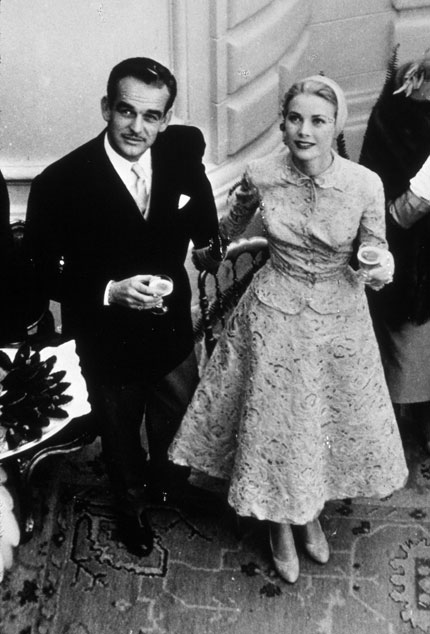
It may be the softest kiss in film history. The sun is setting over West Side rooftops, the sky persimmon. A man, his leg in a cast, sleeps near an open window, undisturbed by a neighbor singing scales. Just after the highest note is reached, a shadow climbs over the man’s chest, shoulder, and chin. We see a face: blue eyes, red lips, skin like poured cream, pearls. Then he sees it. The kiss happens in profile, a slow-motion hallucinatory blur somewhere between myth and dream, a limbic level of consciousness. The director, Alfred Hitchcock, liked to say he got the effect by shaking the camera. In truth, this otherworldly kiss comes to us by way of a double printing. Has any muse in cinema been graced with such a perfect cameo portrait of her power?
“How’s your leg?” she murmurs. “It hurts a little,” Jimmy Stewart answers. Another soft kiss, more teasing questions. “Anything else bothering you?” she asks. “Uh-huh,” he says. “Who are you?”
Who, indeed! In 1954, when Rear Window premiered, Grace Kelly had been in only four films. She was hardly known to the public, and then she was suddenly known—a star. In her first film, Fourteen Hours, she played an innocent bystander, on-screen for two minutes and 14 seconds. In her second, Fred Zinnemann’s High Noon, she co-starred as the pacifist bride of embattled sheriff Gary Cooper. In her third movie, John Ford’sMogambo, she was the prim wife of an anthropologist (Donald Sinden) and Jane to big-game hunter Clark Gable’s Tarzan. It was a steep and impressive learning curve, straight to the top. By the time Hitchcock got his hands on her, figuratively speaking, casting himself as Pygmalion to her Galatea, Grace Kelly was ready for her close-up. Hitchcock gave her one after another, in three films that placed her on a pedestal—Dial M for Murder, Rear Window, and To Catch a Thief—enshrining her as an archetype newly minted. “A snow-covered volcano” was how he put it. She was ladylike yet elemental, suggestive of icy Olympian heights and untouched autonomy yet, beneath it all, unblushing heat and fire. By 1956, two years, six films, and one Academy Award afterRear Window—while the country was still wondering, Who are you, Miss Kelly?—she was gone, off to Europe to marry a prince, whence she would become Her Serene Highness Princess Grace of Monaco.
he appearance and then sudden disappearance of gifted, beautiful blondes is not unknown to Hollywood. Before Grace Kelly’s five-year phase of radiance in the 50s, there was Frances Farmer, whose brilliance roused the industry for six years, from 1936 to 1942. Like Kelly, Farmer was intelligent, her own person, and a serious actress wary of binding contracts. In 1957, only a year after Grace Kelly’s departure, Diane Varsi took the baton, making a big impression as a sensitive ingénue inPeyton Place. Varsi, too, was both smart and skeptical of Hollywood, and fled the industry in 1959. (She returned in the late 60s, but without momentum.) Farmer and Varsi left, respectively, in mental and emotional disarray. The word “disarray,” however, would never find its way into a sentence that included the name Grace Kelly. She was always in control. Always prepared. Always well groomed and well mannered, delightful and kind. And always, eternally it seems, beautiful.
Though it is in Rear Window where Grace Kelly achieves full iconic stature, answering Stewart’s question by circling the room in her pure-white snowcap of a skirt, there is nothing “rear window” about her. She states her full name as she switches on three lights, and her picture-window, Park Avenue perfection is itself a kind of incandescence. Here was a white-glove glow to make men gallant and women swoon, and it was present whether she was dressed in dowdy daywear (her beloved wool skirts and cashmere cardigans) or in the confections of Hollywood designers and Paris couturiers. Hitchcock goes so far as to make a joke of it. “She’s too perfect,” Jimmy Stewart complains. “She’s too talented. She’s too beautiful. She’s too sophisticated. She’s too everything but what I want.” And it was true, except for that last, because at the moment when Miss Kelly left Hollywood the whole world wanted her.
March 12th, 2010 — Charity


Watch the Video above for an Introduction into Falling Whistles Movement.

(Above, Falling Whistles Founder, Sean Carasso)
I seen first hand the creation, dedication and passion for Falling Whistles through my long time friend, Sean Carasso. Falling Whistles began as a small story exposing our world’s largest war. A little more than a year ago two Americans traveled into the Democratic Republic of the Congo on what was meant to be a short learning expedition. By the weeks end, they had discovered an illegal prison holding escaped child soldiers. There they heard of the whistle blowers; boys too small to carry a gun, sent to the front lines of war, armed with only a whistle. That night Sean wrote in his journal “With Falling whistles. they only chance is to feign death or face it”
A friend welcomed Sean home with a fierce embrace and an unusual gift - a whistle. Hanging just over his heart, everywhere they went the whistle would cause conversation and provide an opportunity to speak up for these children. And thus The Falling Whistles campaign was launched with a simple plan - make their weapon your voice and be a whistle blower for peace in Congo.
Falling Whistles has sold over 5,000 whistles and is continuing to rapidly expand. Proceeds go to restoring the lives of war affected children in the Democratic Republic of the Congo, while U.S. whistle blowers build a coalition to fight for their freedom.

Often traumatized, these children are rejected from their homes or return to find their communities disbursed and destroyed. Left with little recourse for action other than continued violence, their behavior often takes the form of street gangs or militia groups.
Short Term: Children displaced by the war have fewer options for survival and are often pulled back into the cycle of war. We have partnered with Congolese community leaders to rehabilitate these children. This process develops local leadership and gives these children the tools to survive and thrive on their own through education, art, medical treatment and nutritional services. Each organization is working to give children the tools to be whistle blowers and stand for peace with the war -region.
Long Term: In order to help the children forced to the front lines, the war must end. Without an organized coalition demanding peace, there is little incentive for out leaders to act, and for those benefiting from the war to stop perpetrating it. To prevent further abuse of children and increase regional stability, our goal is to grow that coalition.

This war is largely funded by the illicit trading of conflict precious minerals. These minerals are mined in Congo and used to create consumer electronics like computers, gaming systems, and cell phones. We find them in our homes, schools and pockets. The lack of transparency in the corporate supply chain has created an environment where purveyors of chaos profit from tin, tantalum, and gold in Congo and are often use militant groups to re- arm. They forcefully control the mines and profit from the dollars of corporate buyers who fail to use fair sources for their minerals.

By buying a whistle (whistles start at 30.00 and 100% of the proceeds go to war affected children in Congo) you as the consumer are given the tools to understand and speak up for one another, and Falling Whistles will work alongside our political leaders toward peace in Congo and demand the products we buy are conflict free. - THE WIFE

February 10th, 2010 — Just ask THE WIFE

Ila Asked:
I hope you are well, Taryn.
I need your advice. I have a wedding to attend in mid March in Scottsdale, Arizona, time: 6pm. And my problem is that I have no idea what to wear. First because it is March and second the time. Also, my friend from Monaco (her family Catholic/conservative) is getting married to a doctor in Arizona.
Please help! 
Ila
THE WIFE Answered:
The first and fore most rule of wedding dress etiquette is never wear any shade of white to a wedding. This color is exclusively reserved for the bride and her wedding party.
Knowing what to wear can be a bit confusing, So it’s always best to take hints from the invitation:
If the invitation reads “White Tie” This is the most formal for all wedding dress codes. It’s at the tip top of glitz and glamour, it’s best you find your most elegant Floor length ball gown, because this is the perfect occasion to wear it. Be sure to accessorize with beautiful jewels and a glamorous up do or other enchanting hairstyle. Men should be in a formal tuxedo with a cumberbund vest, white tie and shiny shoes.
If the invitation reads “Black Tie” then formal attire is required and usually means the wedding is an evening affair. Women do not necessarily have to be in floor length gowns, but should wearing a chic and classy cocktail dress or elegant separates with a small evening bag. Men should be in dapper tuxedos with a black bow tie and fancy shoes.
If the invitation says “Formal or Black Tie Optional.” This suggests something less formal than black tie. Women should be in a cocktail dresses or a suit. Men have the choice to wear a tuxedo or a formal suit and tie.
If the invitation says “Casual” This does not mean show up in jeans, shorts or a tank top. I would encourage to wear a nice button down or polo. Women are fine in a dress, skirt or sophisticated pants with a blouse.
If the invitation does not state what the appropriate attire is, then try to take hint from the season and hour of the wedding. A Spring/Summer wedding is perfect for pastel dresses with dressy sandals and for men lighter colored suits. While a Winter wedding calls for warmer clothes, the wedding site should provide a coat check for heavy coats.
Day weddings are more casual, stay away from long gowns, sequins and heavy beading. Opt instead for knee length dresse or skirts. Feel free to wear a ladies hat or bring sunglasses. If the wedding is on a beach, men are allowed to wear linen shirts and pants or khaki pants with leather sandals. Women are fine in sundresses with flats or sandals, be sure to bring a light cardigan or sweater wrap in case of chilly breezes.
Evening weddings and receptions generally call for cocktail or formal attire, knee length or longer gowns are acceptable as well as darker colors like black. Men should be in business attire.
Always Remember to respect the wishes of the bride and groom, as well as their religious rules. Some Church’s might require different protocol the others. And If you still are confused and don’t know, it is always best to ask someone in the bridal party. - THE WIFE
January 10th, 2010 — Article, Dress Up
This is one of my very very favorite articles I’ve come to find in my monthly favorite, Vanity Fair. The article goes through the entire history of Haute Couture… How it used to be in the good ol’ days and how its transformed to what it has become today. Although the article is quite lengthly, any girl who flaunts her femininity and appreciates the art of a well made gown will just adore the following read. I’ve highlighted some of my favorite parts in what other color then…pink! - THE WIFE
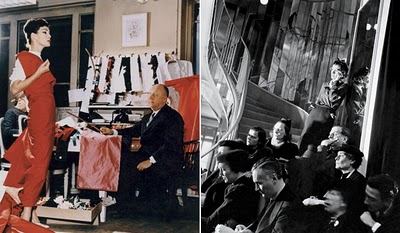
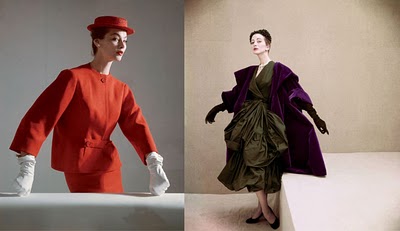
Earlier, in 1945, Diana Vreeland had implored an assistant to bring back a fabric rose from Paris, as post-diluvian proof that couture had survived World War II. And again in 1973, when Vreeland mounted her elegiac Balenciaga retrospective at the Metropolitan Museum of Art, Time’s diagnosticians determined that haute couture, a moribund institution, was “breathing very hard.” Now, with the revered maison of Lacroix having filed for bankruptcy protection, the death knell is being sounded once again. “Personally,” says Hubert de Givenchy, “I do not see a future for haute couture as I knew it. Haute couture means for me perfection.”
But perhaps the reports of haute couture’s demise are once again greatly exaggerated. At the end of January, reversing the direction of the plummeting stock market, the two grandest fashion houses in Paris, Chanel and Dior, were posting sales increases of 20 and 35 percent, respectively. Even as a mass was held to commemorate the one-year anniversary of Yves Saint Laurent’s passing (the official end of fashion, according to his partner, Pierre Bergé), a new name, Alexandre Matthieu, burst onto the lineup for the fall-winter haute couture shows. “Haute couture is still the best way for a designer to get noticed,” argues a Paris insider. “If you show during ready-to-wear, you’re one among a hundred, crowded into a nine-day week. During the couture shows, you are one among only 20, spread over just three days.”
What is this Persephone-like phenomenon called haute couture, which cyclically dies only to be reborn? “According to the bylaws of the Chambre Syndicale de la Haute Couture, a division of the French Ministry of Industry, an haute couturier is a designer who presides over the creation of hand-finished made-to-order clothing, in a “laboratory” that employs at least 20 workers in Paris. The haute couturier must present a minimum of 25 ensembles twice a year, in January and July, and construct a garment over the course of several fittings, directly on a client’s body or on a dress form replicating her physique”. (Hubert de Givenchy, for example, had a dummy built for Audrey Hepburn, whose 31½-22-31½ shape never varied.) From a peak of 200 before World War II, only 11 authentic haute couturiers remain; additionally, there are four correspondent members. (Giorgio Armani joined as one in 2004.) Just two Americans have ever been classified as haute couturiers—Mainbocher (retired 1971) and Ralph Rucci, who was accepted as a guest member in 2002. (After five years and 10 collections, a guest may advance to full membership.) “If someone is simply a couturier,” explains a Parisian expert, “all that means is that you are sewing.” And, the Parisian adds, if a dressmaker uses the term “haute couturier” without the Chambre Syndicale’s sanction, “he can be arrested.”
The origins of haute couture—an appellation contrôlée, or trademarked name, like “champagne,” and “equally a part of our DNA,” says one French fashion professional—date back to Louis XIV, whose finance minister Jean-Baptiste Colbert established France in the 1660s as the leading manufacturer of silk and other luxury items.
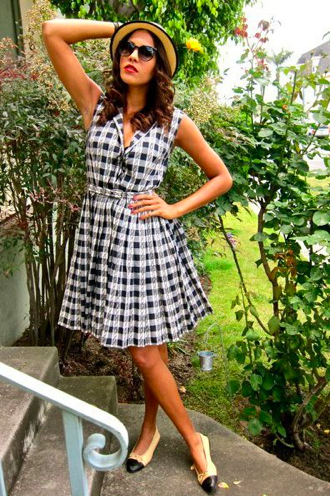
"THE WIFE" is for the timeless wife or elegant wife to be. Whether THE WIFE favors a career working in the corporate world or has dedicated her time and efforts as a housewife, She always maintains a happy and healthy family. THE WIFE is an astounding women and amazing mother, who proudly makes time for her husband and children. THE WIFE loves to cook, has a passion for party planning, a fondness for etiquette, adores decorating and keeping a beautiful home and of course dressing the part. THE WIFE cares about being "green" and takes the time to make her home environmentally friendly. Finally THE WIFE dedicates her spare time to charitable causes and giving back to her community. Women who might inspire THE WIFE would be: Jacqueline Kennedy, Michelle Obama, Grace Kelly, Gwyneth Paltrow, Jenna lyons and Carolina Herrera.
Grammar Warning: I am clearly aware that my grammar is sub par. Please excuse any typos or misspelt words you may come across when reading this blog. There is not need to write or notify me. Thank You Kindly.
- Miss Taryn Cox