Ted Turner has conquered the business world. Now he wants to help save the world. Watch as he shares a list of voluntary initiatives he believes would help conserve valuable natural resources and restore peace and harmony to earth. Be inspired to make a difference!
These are the Ten Voluntary Initiatives as shared by Ted on Oprah’s Master Class on OWN :
I promise to care for planet earth and all living things thereon, especially my fellow human beings.
I promise to treat all persons everywhere with dignity, respect, and friendliness.
I promise to have no more than one or two children.
I promise to use my best efforts to help save what is left of our natural world in its undisturbed state and to restore degraded areas.
I promise to use as little of our nonrenewable resources as possible.
I promise to minimize my use of toxic chemicals, pesticides, and other poisons and encourage others to do the same.
I promise to contribute to those less fortunate, to help them become self-sufficient and to enjoy the benefits of a decent life, including clean air and water, adequate food, health care, housing, education, and individual rights.
I reject the use of force, in particular military force, and I support the United Nations arbitration of international disputes.
I support the total elimination of all nuclear, chemical, and biological weapons and ultimately the elimination of all weapons of mass destruction.
I support the United Nations in its efforts to improve the condition of the planet.
This is the thing: When you hit 28 or 30, everything begins to divide. You can see very clearly two kinds of people. On one side, people who have used their 20s to learn and grow, to find themselves and their dreams, people who know what works and what doesn’t, who have pushed through to become real live adults. Then there’s the other kind, who are hanging onto college, or high school even, with all their might. They’ve stayed in jobs they hate, because they’re too scared to get another one. They’ve stayed with men or women who are good but not great, because they don’t want to be lonely. They mean to develop intimate friendships, they mean to stop drinking like life is one big frat party. But they don’t do those things, so they live in an extended adolescence, no closer to adulthood than when they graduated.
Don’t be like that. Don’t get stuck. Move, travel, take a class, take a risk. There is a season for wildness and a season for settledness, and this is neither. This season is about becoming. Don’t lose yourself at happy hour, but don’t lose yourself on the corporate ladder either. Stop every once in a while and go out to coffee or climb in bed with your journal.
Ask yourself some good questions like: “Am I proud of the life I’m living? What have I tried this month? What have I learned this year? What parts of my childhood am I leaving behind, and what parts am I choosing to keep? Do the people I’m spending time with give me life, or make me feel small? Is there any brokenness in my life that’s keeping me from moving forward?”
Now is your time. Walk closely with people you love, and with people who believe life is good and a grand adventure. Don’t get stuck in the past, and don’t try to fast-forward yourself into a future you haven’t yet earned. Give today all the love and intensity and courage you can, and keep traveling honestly along life’s path. -m.relevantmagazine.Com
A few weeks ago, Mina, from the website MiniPiccolini asked me to share with her readers my top 10 favorite things for wives. Below are my favorite things every wife should have in her life.
1. William Sonoma - A wondrous playground for any wife who loves to cook in her kitchen. This charming store provides tools to make preparation easier, cooking classes for those who want to learn, and inspiration around every corner for those looking for creativity. www.williamsonoma.com
2. Mrs. Meyers – Every wife should have an eco friendly conscious when shopping for her household. Enter Mrs. Meyers… A collection of household products with essential oils from flowers and herbs that pack a real punch against daily dirt and grim. From dish soap to laundry detergent to window cleaners Mrs. Meyers brings a powerful clean and a garden fresh scent to your home. All their products are earth friendly, bio degradable, non toxic and never tested on animals. www.mrsmeyers.com
3. Emily Post Etiquette Book - Every wife should always carry herself like a true lady. Emily Post’s discourses on etiquette is said to be one of the most useful reference books published, next to a dictionary, a thesaurus and a world atlas. The new edition has discussions on perennially necessary topics, such as where to place a soup spoon when setting a formal table and whether one may wear white after Labor Day (the answer is yes). This integration of new material with old, showing respect and consideration for others while placing a premium on honesty, graciousness and deference. It also serves as a reminder of how individual choices may affect others and how easy it is to choose—words, wardrobes, gifts and actions—more wisely. $27.00 on Amazon.Com
4. Stationer - Every wife can benefit from a very creative and talented stationer. While I take my services to Jonathan Wright and Sugar Paper in Los Angeles, They are always there to help with last minute gifts and an abundance of greeting cards for every occasion. Your stationer can also aid you in the designing all of life’s celebrations from wedding invitations to birth announcements to personal stationary for thank you notes. Jonathan Wright 7404 Beverly Blvd, Los Angeles, California 90036 323 931 1710; Sugar Paper 253 26th Street, Brentwood, California 310 451 7870
5. La Perla – Just like the age old saying “A lamb in the kitchen and a tiger in the bedroom.” What better way to inspire a healthy and consistent sex life with your husband than with luxurious lingerie from La Perla. Every man can appreciate his wife coming to bed in a flirtatious silk night gown or something else a little more provocative. www.laperla.com
Prescription drugs kill some 200,000 Americans every year. Will that number go up, now that most clinical trials are conducted overseas—on sick Russians, homeless Poles, and slum-dwelling Chinese—in places where regulation is virtually nonexistent, the F.D.A. doesn’t reach, and “mistakes” can end up in pauper’s graves? The authors investigate the globalization of the pharmaceutical industry, and the U.S. Government’s failure to rein in a lethal profit machine.
Once upon a time, the drugs Americans took to treat chronic diseases, clear up infections, improve their state of mind, and enhance their sexual vitality were tested primarily either in the United States (the vast majority of cases) or in Europe. No longer. As recently as 1990, according to the inspector general of the Department of Health and Human Services, a mere 271 trials were being conducted in foreign countries of drugs intended for American use. By 2008, the number had risen to 6,485—an increase of more than 2,000 percent. A database being compiled by the National Institutes of Health has identified 58,788 such trials in 173 countries outside the United States since 2000. In 2008 alone, according to the inspector general’s report, 80 percent of the applications submitted to the F.D.A. for new drugs contained data from foreign clinical trials. Increasingly, companies are doing 100 percent of their testing offshore. The inspector general found that the 20 largest U.S.-based pharmaceutical companies now conducted “one-third of their clinical trials exclusively at foreign sites.” All of this is taking place when more drugs than ever—some 2,900 different drugs for some 4,600 different conditions—are undergoing clinical testing and vying to come to market.
Why it’s time to reimagine masculinity at work and at home.
Newsweek Article By: Andrew Romano and Tony Dokoupil
What’s the matter with men? For years, the media have delivered the direst of prognoses. Men are “in decline.” Guys are getting “stiffed.” The “war on boys” has begun. And so on. This summer, The Atlantic’s Hanna Rosin went so far as to declare that “The End of Men” is upon us.
There’s certainly some substance to these claims. As the U.S. economy has transitioned from brawn to brain over the past three decades, a growing number of women have gone off to work. Men’s share of the labor force has declined from 70 percent in 1945 to less than 50 percent today, and in the country’s biggest cities, young, single, childless women—that is, the next generation—earn 8 percent more than their male peers. Women have matched or overtaken men as a percentage of students in college and graduate school, while men have retained their lead in alcoholism, suicide, homelessness, violence, and criminality. Factor in the Great Recession, which has decimated male-heavy industries like construction and manufacturing, and it’s no wonder so many deadline anthropologists are down on men. But while the state of American manhood has inspired plenty of anxious trend pieces, few observers have bothered to address the obvious question: if men are going off the rails, how do they get back on track?
I have a friend who met her husband at a red light. She was 15, in a car with a pile of girls. He was in another car with a crowd of boys. As the light turned green, they all decided to pull into a nearby park and party. My friend spent the evening sitting on a picnic table talking to one of the guys. Thirty-seven years later, they are still together.
We are born to love. That feeling of elation that we call romantic love is deeply embedded in our brains. But can it last? This was what my colleagues and I set out to discover in 2007. Led by Bianca Acevedo, PhD, our team asked this question of nearly everyone we met, searching for people who said they were still wild about their longtime spouse. Eventually we scanned the brains of 17 such people as they looked at a photograph of their sweetheart. Most were in their 50s and married an average of 21 years.
Tip No. 8: A good wife always cooks a big Saturday or Sunday breakfast for her family.
Apparently, I’m not a good wife.
I’m lucky if I shave my legs every week or every other week. I wear enough flannel to bed for a camp out. And I’d rather spend my weekend mornings playing tennis.
And yet, there is a part of me that admires the June Cleavers of the world.
So when I heard about The Wife, I wanted to meet the woman behind the website. Taryn Cox’s blog, in her words, “is based on my philosophies, beliefs, and aspirations of being a good wife.”
Feminists may cringe. But Taryn has a loyal following of women who are nostalgic for the ’50s, women who want, as one of her readers writes, to dress to the nines to serve her husband a mean martini after he gets home from a hard day at the office, even if they’ve just had a hard day at the office.
I met Taryn for lunch one Sunday and she arrived looking fabulous in high heels, handing me a tidy box of cookies wrapped in ribbon.
The first thing she told me is that she isn’t actually a wife. Now it was starting to make sense. Because I don’t know any wives who are trying to be better wives, only wives who are trying to make their husbands be better husbands.
But then I found out that Taryn is a domestic assistant so she does know a little bit about the gig. Taryn works for Monica Rosenthal, the actress who played Ray’s sister-in-law on “Everybody Loves Raymond,” and the wife of Phil Rosenthal, the man who created the sitcom. A philanthropist, Monica leaves the day to day household tasks to Taryn: planning birthday parties, picking out the children’s wardrobes, grocery shopping and running errands.
“It’s strange,” Taryn says. “But I love doing the dishes and laundry.” Especially in a dress, preferably vintage.
The wedding of the 20th century, in 1981, celebrated a marriage that turned out to be a huge bust. It ended as badly as a relationship can: scandal, divorce and, ultimately, death and worldwide weeping.
So when the firstborn son of that union, Britain’s Prince William, set in motion the wedding of this century by getting engaged to Catherine Middleton, he did things a little differently. He picked someone older than he is (by six months), who went to the same university he did and whom he’d dated for a long time. Although she is not of royal blood, she stands to become the first English Queen with a university degree, so in one fundamental way, theirs is a union of equals. In that regard, the new couple reflect the changes in the shape and nature of marriage that have been rippling throughout the Western world for the past few decades.(See an album of British royal weddings.)
In fact, statistically speaking, a young man of William’s age — if not his royal English heritage — might be just as likely not to get married, yet. In 1960, the year before Princess Diana, William’s mother, was born, nearly 70% of American adults were married; now only about half are. Eight times as many children are born out of wedlock. Back then, two-thirds of 20-somethings were married; in 2008 just 26% were. And college graduates are now far more likely to marry (64%) than those with no higher education (48%).(See a video of Belinda Luscombe sharing her thoughts on the TIME/Pew survey.)
When an institution so central to human experience suddenly changes shape in the space of a generation or two, it’s worth trying to figure out why. This fall the Pew Research Center, in association with TIME, conducted a nationwide poll exploring the contours of modern marriage and the new American family, posing questions about what people want and expect out of marriage and family life, why they enter into committed relationships and what they gain from them. What we found is that marriage, whatever its social, spiritual or symbolic appeal, is in purely practical terms just not as necessary as it used to be. Neither men nor women need to be married to have sex or companionship or professional success or respect or even children — yet marriage remains revered and desired.(See the Pew Research Center’s full report “The Decline of Marriage and Rise of New Families.”)
And of all the transformations our family structures have undergone in the past 50 years, perhaps the most profound is the marriage differential that has opened between the rich and the poor. In 1960 the median household income of married adults was 12% higher than that of single adults, after adjusting for household size. By 2008 this gap had grown to 41%. In other words, the richer and more educated you are, the more likely you are to marry, or to be married — or, conversely, if you’re married, you’re more likely to be well off.(See pictures of couples that have been married for 50 years.)
The question of why the wealth disparity between the married and the unmarried has grown so much is related to other, broader issues about marriage: whom it best serves, how it relates to parenting and family life and how its voluntary nature changes social structures.
The Marrying Kind
In 1978, when the divorce rate was much higher than it is today, a TIME poll asked Americans if they thought marriage was becoming obsolete. Twenty-eight percent did.(See Part I of the TIME/Pew results.)
Since then, we’ve watched that famous royal marriage and the arrival of Divorce Court. We’ve tuned in to Family Ties (nuclear family with three kids) and Modern Family (nuclear family with three kids, plus gay uncles with an adopted Vietnamese baby and a grandfather with a Colombian second wife and dorky stepchild). We’ve spent time with Will and Grace, who bickered like spouses but weren’t, and with the stars of Newlyweds: Nick & Jessica, who were spouses, bickered and then weren’t anymore. We’ve seen some political marriages survive unexpectedly (Bill and Hillary Clinton) and others unpredictably falter (Al and Tipper Gore).
We’ve seen the rise of a $40 billion-plus wedding industry, flames fanned by dating sites, and reality shows playing the soul-mate game — alongside the rise of the prenup, the postnup and, most recently, divorce insurance. We care about marriage so much that one of the fiercest political and legal fights in years is being waged over whom the state permits to get married. We’ve seen a former head of state’s child (Chelsea Clinton) marry after living with her boyfriend and a potential head of state’s child (Bristol Palin) have a child before leaving home.(See a brief history of White House weddings.)
So, as we circle back around to witness another royal engagement, where are we on the marriage question? Less wedded to it. The Pew survey reveals that nearly 40% of us think marriage is obsolete. This doesn’t mean, though, that we’re pessimistic about the future of the American family; we have more faith in the family than we do in the nation’s education system or its economy. We’re just more flexible about how family gets defined.(See the Pew Research Center’s interactive graphic “Five Decades of Marriage Trends.”)
Even more surprising: overwhelmingly, Americans still venerate marriage enough to want to try it. About 70% of us have been married at least once, according to the 2010 Census. The Pew poll found that although 44% of Americans under 30 believe marriage is heading for extinction, only 5% of those in that age group do not want to get married. Sociologists note that Americans have a rate of marriage — and of remarriage — among the highest in the Western world. (In between is a divorce rate higher than that of most countries in the European Union.) We spill copious amounts of ink and spend copious amounts of money being anxious about marriage, both collectively and individually. We view the state of our families as a symbol of the state of our nation, and we treat marriage as a personal project, something we work at and try to perfect. “Getting married is a way to show family and friends that you have a successful personal life,” says Andrew Cherlin, a sociologist at Johns Hopkins University and the author of The Marriage-Go-Round: The State of Marriage and the Family in America Today. “It’s like the ultimate merit badge.”
But if marriage is no longer obligatory or even — in certain cases — helpful, then what is it for? It’s impossible to address that question without first answering another: Who is marriage for?
Many men believe it is important for them to protect and provide for those they love. Let him know that you believe in his talents and skills and are supportive of him.
2. Understanding
One of the ways you can both tell and show your husband that you want to understand him is by making a commitment to daily dialogue with him. Daily dialogue only takes 20 minutes out of your day. Isn’t your husband worth 20 minutes each day?
3. Affirmation of His Accomplishments
Most guys like to be patted on the back. Compliment your husband often. Just don’t over do it with sicky sweet oozes of how great he is. That type of affirmation will backfire.
4. Acceptance
Many husbands are hurt and angered when their wives try to change them. Realize that the only person that you can change is yourself.
5. Less Chatter
If your husband is tired, or involved with a project, and you really want to talk to him about something, get to the point. If he wants the details of the topic, he will ask for them.
6. Affection
Hold your husband’s hand in public, leave a message of love on his voice mail, massage his shoulders, give him an unexpected kiss. Men like to be romanced too!
7. Respect
Show respect for your husband by not making negative comments about his thoughts and opinions, by being considerate of his plans, and by avoiding the “eye roll” when listening to him.
8. Free Time
Most everyone has a desire for some quiet time alone, and time to re-energize, regroup, and reconnect. When your husband first gets home from work, allow him some free time to unwind. Don’t over-schedule his days off with projects around the house.
9. Trust
Trust is vital in the success of a marriage. If you are having doubts about your husband and find it difficult to trust him, seek counseling and not spying.
10. To Be a Companion
Hopefully, you can say that your husband is not only your lover, but also your friend. Staying friends and companions through the years requires that you find ways to make time together and to do things together.
As an interior designer with over 25 years in the game, you could say I have endured some design challenges. And now as design head for Armani Casa, Giorgio Armani’s interior design studio, I have been fortunate enough to design home environments for bachelors like singer John Mayer, violinist David Garrett, actor Adrien Brody, and various captains’ of industry. I’ve spent seven years designing showrooms for Ralph Lauren, including the Beverly Hills and New York stores amongst others. But the most challenging feat is often a new home for ‘newlyweds’
Man, Check! Ring, Check! Venue, Check! But did you really, sign on to gaze at that threadbare sofa ‘Til Death Do Us part’? What will your response be when he comes home dripping from sweat, some hazy, hot and humid mid-August summer day during a New York City garbage strike? He walks in, runs his hands through his sweat laden hair, hurls his Kenneth Cole laptop messenger bag to the floor, runs into the kitchen for one, no two, cold ones. Pops the cap, grabs the remote control and salt and vinegar chips, to watch the eighteenth run of Rocky 2 (like he never saw it before), poised to stretch out, feet up and realizes someone moved HIS sofa?
‘Till Death Do Us’ part. Hmmmmm. Sometime in the not-so–wee hours of the night (okay, day after he’d gone to work) the Salvation Army Truck arrived. I know, I know you never saw it coming, didn’t call them, but somehow they managed to enter your newlywed home and haul that raggedy thing to an unknown location. Hmmmm. Where, Oh where are the by-laws buried for the not-so harmonious task of ‘blending furniture’? This was not covered in marriage counseling. If so, the pages must have been stuck together. It is likely easier to ‘blend’ in-laws, and extended families. Well except for the ‘crazy cousin’ no one wants to claim much less talk to.
I am often asked to ‘marry’ styles. Contemporary, with Traditional, Moderne, with Bohemia, French with Vintage Metal, as in Heavy Metal. Generally there has already been a degree of editing done way before I show up. But all too often, there is that one piece that manages to be the ‘button’. The piece that can be a real deal breaker. The one fabric clad (often stained) heavy piece from the ‘hot’ bachelor/bachelorette days that can question your own judgment. The piece that makes you wonder is you should have married ‘Fred’ instead of ‘Ted’. What is the solution?
The answer, in short is ‘diplomacy’. The same level of ‘diplomacy’ required in deciding where to spend the holidays, how to tactfully avoid eating his mamas, overdone pearl onion casserole which is like chewing a plate of marbles, with cheese.
Identify pieces that fit well into the new environment.
When I say ‘fit’, I have four suggestions:
1) Scaled to fit. Do not keep a large sofa in a studio apartment just because your sister gave it to you.
2) Keep ‘non-trendy’ pieces that are in good condition and made well. Even if something is old consider updating with new knobs, pulls, hardware etc. Strip the finish and add a coat of paint. There are numerous shops allowing DIY practicing before committing to an entire job.
3) Make breathing new life into old pieces a ‘date night’. Wear sexy clothing and he will forget you’re ripping the denim fabric off of his favorite football night chair, replacing it with velvet and a colorful Jonathan Adler toss pillow. Whenever, he see’s the chair, he will imagine how much fun you had frolicking on it, forgetting what it used to look like. And if he can’t remember, frolic some more until it’s all he can think about. You know what I mean!
4) 1-800-STO-AWAY and any likely facsimile available in your region. Costs are generally manageable. Who knows, down the road there may be more room for it, or the style will come back. Again, only keep pieces in great condition.
Remember, “keep it moving or be left behind”. So try not to worry about sofas, curios, tables and such. When the music stops, just be glad to have a chair! - Joy Moyer
The good old days of set family roles are long gone, but with a little bit of hard work and a lot of determination, you can bring back the original and best ‘happy family’!
Things You’ll Need:
Your own house
A partner and or/children
Patience
Instructions:
1. Start with your personal self. Rise an hour early, before the rest of your family, and take a warm shower {not hot-don’t want to scald your skin!}, using a fragrant soap or bodywash. Dress in appropriate clothing, tight enough to show off your feminine figure, and loose enough to be practical. Spray a favourite scent in front of you, then walk into it, giving you a slight, alluring scent that won’t be harsh on anyone’s nose! For makeup, stick with creamy foundation, a mild rosy blush and light eye makeup. Pin your hair up into a pretty yet practical style. The point is to make your husband/partner admire your ability to be beautiful the second he wakes. After this is completed, wake the children {if you have any}. Get them organised for showers and dressing, and to collect their homework from the previous night.
2. He will be awake at this point, so while he showers and shaves, swiftly prepare a non-greasy but filling breakfast for yourselves. Aim to create something new every few days, for example, bacon and eggs on toast one morning, mushroom omelette the next. When he is dressed and seated at the table, and before he reads his paper or turns on the tv, tell him what you have planned for dinner that night, and ask him for any suggestions he may have. This lets him know you care about his opinion and input, which is essential for any healthy relationship. Slip in little things like “I know you like mushrooms, so I thought a mushroom and beef stew would be good for dinner tonight?”
3. While he is eating, prepare his lunch and a few snacks for the day. Pack something filling, nutritious AND tasty. If you’re lucky enough to have children, now is the time to pack their lunches too. If he is on any medication, or has any specific needs for that day, e.g: You know he has a cold, so pack a few aspirin and a handkerchief. Pay close attention to his needs, and when you use that knowledge to attend to him, he will be happy…and when my husband is happy, I’m happy!
4. Depending on who leaves the house first, kiss your husband and children goodbye. Wish him a good day and let him know that you’re proud of how hard he works, and ask him if there is anything he wants done today. If he says, for example, “I have no clean socks”, apologise for not noticing, and promise to wash them the second he goes to work. Even if you don’t touch them for a few hours, he leaves the house with peace of mind that he can come home to clean socks and a wife that remembers his needs. Once everyone has left the house, clear the breakfast dishes and wipe the sink and benchtop down. Now is the time to wrap a scarf around your hair and don an apron and gloves. Start with clothing. Find all the dirty clothing and wash it, then dry it outside if possible. It gives a nicer, fresher smell. While they are washing, change over the bedsheets and give them a light spritz of his favourite perfume. Iron and fold the clothing. Pick up the general mess, and sort it into it’s appropriate places. Wipe dust from shelves, put on a pair of your highest high heels and pay close attention to all the places that you can now see- these are the places your husband will notice! Mop and vaccuum the floors {obviously, only mop the tiles or vinyl floors!}. Open the windows and sit a vase of fresh flowers or spring of lavender in front of each window. A great trick for the room closest to the front door is, later in the day, to bake {yes, handmake!} a loaf of bread, and place it to cool on an open window ledge near the front door. As soon as he enters, he gets that ultimate homely comfort smell- warm, soft, hand baked bread. It makes a perfect tool to relax him after a long hard day, and he won’t even know it!
5. Next, cook yourself a small, quick meal. As you eat, you can relax outside, watch a tv show or call a friend. Your cleaning is all done, so if you’re making dinner, do it now before the children get home. The instant they do get home, get them into a bath, dressed in clean clothes and doing their homework at the kitchen table. You can provide assistance and keep an eye on them as you cook- two jobs in one! Let them play or watch tv before your husband gets home, so that they are calm and relaxed to greet their father. Let him unwind with warmed slippers and dressing gown {clothes dryer for a few minutes!} in his favourite chair, and ask him, with genuine interest, how his day was. Give comments, always supporting him, such as “Oh darling, how terrible! But don’t worry, I baked your favourite apple crumble!” After dinner, play a boardgame or have a ’show and tell’, where each family member tells something interesting they learnt or experienced that day, ending with a discussion on current events and news. Send the children to bed with hugs and kisses to their parents, let them know they are loved and their love is appreciated in return.
6. Head to the bedroom and make sure it looks and smells nice. Turn back the covers so he only need slip between the covers. Take down your hair, clean off your makeup, and get into a nice, clean nightdress or better yet, nothing at all. *wink* When he goes to bed, offer a massage, or gently stroke his hair. If he wants to discuss anything, listen to him and let him know you’re listening. - eHow.Com
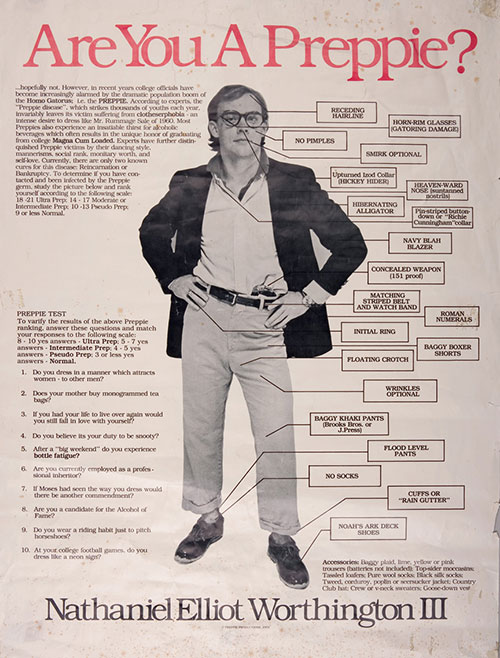
We know that many of you understand the principles of preppy style. But just to be sure, let’s review them again.
We wear sportswear. This makes it easier to go from sporting events to social events (not that there is much difference) without changing.
We generally underdress. We prefer it to overdressing.
Your underwear must not show. Wear a nude-colored strapless bra. Pull up your pants. Wear a belt. Do something. Use a tie!
We do not display our wit through T-shirt slogans.
Every single one of us—no matter the age or gender or sexual preference—owns a blue blazer.
We take care of our clothes, but we’re not obsessive. A tiny hole in a sweater, a teensy stain on the knee of our trousers, doesn’t throw us. (We are the people who brought you duct-taped Blucher moccasins.)
We do, however, wear a lot of white in the summer, and it must be spotless.
Don’t knock seersucker till you’ve tried it. (Between Memorial Day and Labor Day, unless you live in Palm Beach or Southern California, or the southern Mediterranean, please.)
Bags and shoes need not match.
Jewelry should not match, though metals should.
On the other hand, your watch doesn’t have to be the same metal as your jewelry.
And you can wear gold with a platinum wedding band and/or engagement ring.
Men’s jewelry should be restricted to a handsome watch, a wedding band if he is American and married, and nothing else. If he has a family-crest ring, it may be worn as well. For black-tie, of course, shirt studs and matching cuff links are de rigueur.
Nose rings are never preppy.
Neither (shudder) are belly-button piercings.
Nor are (two shudders) tongue studs.
And that goes for ankle bracelets.
Tattoos: Men who have been in a war have them, and that’s one thing. (Gang wars don’t count.) Anyone else looks like she is trying hard to be cool. Since the body ages, if you must tattoo, find a spot that won’t stretch too much. One day you will want to wear a halter-necked backless gown. Will you want everyone at the party to know you once loved John Krasinski?
Sneakers (a.k.a. tennis shoes, running shoes, trainers) are not worn with skirts.
Men may wear sneakers with linen or cotton trousers to casual summer parties.
Women over the age of 15 may wear a simple black dress. Women over the age of 21 must have several in rotation.
High-heel rule: You must be able to run in them—on cobblestones, on a dock, in case of a spontaneous foot race.
Clothes can cost any amount, but they must fit. Many a preppy has an item from a vintage shop or a lost-and-found bin at the club that was tailored and looks incredibly chic.
Do not fret if cashmere is too pricey. Preppies love cotton and merino-wool sweaters.
We do not wear our cell phones or BlackBerrys suspended from our belts. (That includes you, President Obama.)
Real suspenders are attached with buttons. We do not wear the clip versions.
Learn how to tie your bow tie. Do not invest in clip-ons.
Preppies are considerate about dressing our age. It is for you, not for us.
Men, if you made the mistake of buying Tevas or leather sandals, please give them to Goodwill.
You may, however, wear flip-flops to the beach if your toes are presentable. Be vigilant!
Pareos (sarongs) are for the beach, not for the mall. (Even if it’s near the beach.)
Riding boots may be worn by non-riders; cowboy boots may be worn by those who have never been on a horse. However, cowboy hats may not be worn by anyone who isn’t technically a cowboy or a cowgirl.
You may wear a Harvard sweatshirt if: you attended Harvard, your spouse attended Harvard, or your children attend Harvard. Otherwise, you are inviting an uncomfortable question.
If your best friend is a designer (clothes, accessories, jewelry), you should wear a piece from his or her collection. If his or her taste and yours don’t coincide, buy a piece or two to show your loyal support—but don’t wear them.
Every preppy woman has a friend who is a jewelry designer.
No man bags.
Preppies don’t perm their hair.
Preppy men do not believe that comb-overs disguise anything.
You can never go wrong with a trench coat.
Sweat suits are for sweating. You can try to get away with wearing sweats to carpool, to pick up the newspaper, or to drive to the dump, but last time you were at the dump, the drop-dead-attractive widower from Maple Lane was there, too.
And finally:
The best fashion statement is no fashion statement. - Vanity Fair.Com
What are conflict diamonds, sometimes called blood diamonds?
Conflict diamonds, sometimes called blood diamonds, are diamonds that are sold to fund the unlawful and illegal operations of rebel, military and terrorist groups. Countries that have been most affected by conflict diamonds are Sierra Leone, Angola, Liberia and the Democratic Republic of Congo — all places where citizens have been terrorized, mutilated and killed by groups in control of the local diamond trade.
Wars in most of those areas have ended or at least decreased in intensity, but conflict diamonds from Côte d’Ivoire, in West Africa, and Liberia are still reaching the trade labeled as conflict-free diamonds.
In 2000, South African countries with a legitimate diamond trade began a campaign to track the origins of all rough diamonds, attempting to put a stop to blood diamond sales from known conflict areas. Their efforts eventually resulted in The Kimberley Process Certification Scheme (KPCS), an international effort to rid the world of conflict diamonds.
Kimberley Process Goals
The goals of the Kimberley Process are to document and track all rough diamonds entering a participating country, with shippers placing stones in tamper-proof shipping crates and providing enough detailed information about their origins to prove they did not originate in a conflict zone.
The KPCS isn’t fully operational among its members — probably normal for an agreement that involves the cooperation of dozens of governments and non-governmental agencies. Many countries haven’t even committed to the program.
The goals of the KPCS will take time to achieve, but what’s already been accomplished is significant. Because it’s a self-regulating program, additional controls are necessary to truly ensure that blood diamond trade is halted — or at least minimized.
How consumers can help stop blood diamond trade.
Retailers cannot guarantee that the diamond you purchase is not a conflict diamond. As consumers, we have the power to change that by demanding details about the diamonds we buy. Demanding proof that a diamond is conflict-free sends a powerful message to the world that we will not support an industry or nation that helps fund terror groups. Change won’t happen overnight, but it will happen if we are persistent.
Adhering to The Code requires each company to initiate a paper trail that tracks a diamond’s progression from the mine to its retail destination. The Code also includes rules for proper handling, packing and marking of all diamonds that are represented as Canadian stones. Even with the guidelines, there’s no way to absolutely guarantee a diamond is Canadian, but the process definitely helps eliminate doubt.
The Canadian program is voluntary, so not all retailers participate. Those who do must provide consumers with:
The diamond Identification Number
The retailer’s name and address
An invoice number and the date of the invoice
The polished diamond description
An explanation of the Code
A list of signatories of the Code is available online, naming retailers and wholesalers who are committed to following the Code’s procedures.
It’s difficult for most of us to imagine what life is like in countries where diamonds are the source of so much chaos and suffering, and the connection between terror and diamonds is not something that’s reported heavily in the press. The 2006 movie Blood Diamond, starring Leonardo DiCaprio, should help make the issues more mainstream, if only temporarily.
Take some time to learn more about the problems that conflict diamonds create, then follow your heart the next time you shop for a diamond. - About.Com
Turns out diamonds may not be everyone’s best friend. The United States buys $25 billion worth of the gems each year — as much as the rest of the world’s countries combined. But the profits don’t always go to the people who mine, cut, and polish the stones. Often they go to finance warfare, as seen in the movie Blood Diamond, starring January cover girl Jennifer Connelly. A blood, or conflict, diamond is one mined in an African war zone, then sold to a supplier to finance rebel warfare. And yet buying a “clean” diamond can be difficult because it’s often impossible to track its origin.
Diamonds have a long history of being one of the most valuable commodities in Africa, beginning in 1866, when the stones were discovered in South Africa. (In 1870, 269,000 carats were extracted from South Africa; by 2006, the number had risen to about 10 million carats annually.) With subsequent diamond discoveries in other parts of Africa, the rush that followed began a complex story of corruption. It’s counterintuitive that the existence of a rich natural resource could hurt, rather than help, the economy, and become a source of violence and bloodshed. But since the early 1990s, rebel groups in Sierra Leone, Angola, and other countries have controlled the mines, coercing workers to labor in them and fund warfare. Rapper Kanye West brought attention to the problem with his 2005 song, “Diamonds from Sierra Leone”: “The diamonds, the chains, the bracelets, the charmses/I thought my Jesus Piece was so harmless/’til I seen a picture of a shorty armless.”
In the Democratic Republic of Congo (DRC), about one million diamond diggers work for less than a dollar per day. The majority of the operations involve alluvial mining: People, including children, stand in a stream with a sieve or other simple tool, sifting through dirt and working inhumane hours under grim conditions with no guarantee they’ll find anything. And while the DRC has 30 percent of the world’s diamond reserves and produces $2 billion worth of diamonds annually, 90 percent of its population lives in poverty. Even more devastating: Since 1998, four million people in the DRC have died in civil war conflicts.
“It’s diamonds for guns,” explains Beth Gerstein, 31, who, in December of 2004, was about to get engaged when she and her boyfriend saw a PBS Frontline report on conflict diamonds. Conflict diamonds can enter the trade when rebels smuggle the diamonds across the borders into “conflict-free” zones, where they are sold to the international market. Money made from these sales is then used to buy arms for rebel militias in countries like Sierra Leone. “We didn’t want this symbol of our commitment and love to be implicated in the suffering of others,” she says. But most of the jewelers they approached claimed they didn’t know the issues. “When we’d ask, ‘Where does this diamond come from?’ they said they couldn’t tell us. They said, ‘Trust us, it’s not a problem.’”
In theory, it shouldn’t be a problem. In 2003, the United Nations passed the Kimberley Process Certification Scheme, wherein countries agree to voluntarily monitor their diamond supplies to ensure they’re not financing rebel militias. Most of the larger diamond companies have reported drops in the rate of conflict stones in their supplies since Kimberley — saying that less than 1% of the gems on the market are conflict diamonds, according to the World Diamond Council — but Amnesty International points out that change is slower than people may think. In a September 2006 survey of jewelry retailers, only 27% said they had a policy on conflict diamonds; and of those, only half issued warranties. Many were unable to explain the conflict-diamond crisis and were unaware of the Kimberley Process. Furthermore, 110 out of 246 shops across the U.S. refused outright to take the survey.
“There’s a vast imbalance between public relations effort and the effort made to ensure that the Kimberley Process is really working,” says Amy O’Meara, an associate with the Business and Human Rights program for Amnesty International USA. The Kimberley Process is self-regulated, so it’s difficult to trust. Those in charge of monitoring are also the people who stand to profit from the diamonds. “The industry has agreed to police itself. While we’re happy they made that commitment, they have a lot of history to overcome,” O’Meara says.
Gerstein thinks people should take matters into their own hands. “The industry is only going to change if consumers demand it,” she says. Which is why she co-founded Brilliant Earth, a company that sells only conflict-free diamonds — mining them from Canada, where a third party regulates, monitors, and tracks the gems. She also co-founded Diamonds for Africa Fund (DFA), a nonprofit that provides medicine, food, and books to African communities ravaged by unethical mining.
No matter where you’re shopping for diamonds, you can always put your mind at ease by asking the following questions (from Amnesty International USA’s diamond buying guide), which any diamond salesperson should be able to answer:
How can I be sure none of your jewelry contains conflict diamonds?
Do you know where the diamonds you sell come from?
Can I see a copy of your company’s policy on conflict diamonds?
Can you show me a written statement from your suppliers guaranteeing that your diamonds are conflict-free?
“Keep asking questions until you feel comfortable,” advises O’Meara. Go to brilliantearth.com to get more information; visit diamondsforafricafund.org to donate; or log on to amnestyusa.org to find out how you can put pressure on the diamond industry. - MarieClaire.Com
March 5, 2006 By: Charlotte Allen for The Los Angeles Times
BETTY FRIEDAN, it seems, died just in time to roll over in her grave.
A new study by two University of Virginia sociologists concludes that stay-at-home wives whose husbands are the primary family breadwinners don’t suffer from “the problem that has no name,” as Friedan famously wrote in 1963. In fact, the majority of full-time homemakers don’t experience any kind of special problem, according to professors W. Bradford Wilcox and Stephen L. Nock, who analyzed data from a huge University of Wisconsin survey of families, conducted during the 1990s.
Here are the figures, published in this month’s issue of the journal Social Forces: 52% of wives who don’t work outside the home reported they were “very happy” with their marriages, compared with 41% of wives in the workforce.
The more traditional a marriage is, the sociologists found, the higher the percentage of happy wives. Among couples who have the husband as the primary breadwinner, who worship together regularly and who believe in marriage as an institution that requires a lifelong commitment, 61% of wives said they were “very happy” with their marriages. Among couples whose marriage does not have all these characteristics, the percentage of happy wives dips to an average of 45.
Lest you think the statistics come out this way because tradition-minded women happen to like tradition-minded wedlock — or they’re just brainwashed by their churches — you’re wrong. In an unpublished second paper, Wilcox sifted through the survey data and discovered that even wives who describe themselves as feminists report being happier with traditional marital arrangements in which they stay home with the kids and their husbands provide for them.
“They might think of themselves as progressives and believe in gender equality, but the same pattern holds for them,” Wilcox said.
One more surprise: Even for wives who work full time outside the home, the key to marital happiness isn’t splitting household chores and child care down the middle with their husbands. It’s much simpler: an affectionate and appreciative husband who believes, along with his wife, that marriage is forever. Sociologists call it “emotion work” — husbands talking to their wives, being understanding and supportive, spending quality time in the form of romantic evenings for two, walking hand-in-hand on the beach and so forth.
“It’s far more important than who does the dishes and folds the laundry,” Wilcox said.
In 1858, a British epidemiologist named William Farr set out to study what he called the “conjugal condition” of the people of France. He divided the adult population into three distinct categories: the “married,” consisting of husbands and wives; the “celibate,” defined as the bachelors and spinsters who had never married; and finally the “widowed,” those who had experienced the death of a spouse. Using birth, death and marriage records, Farr analyzed the relative mortality rates of the three groups at various ages. The work, a groundbreaking study that helped establish the field of medical statistics, showed that the unmarried died from disease “in undue proportion” to their married counterparts. And the widowed, Farr found, fared worst of all.
Farr’s was among the first scholarly works to suggest that there is a health advantage to marriage and to identify marital loss as a significant risk factor for poor health. Married people, the data seemed to show, lived longer, healthier lives. “Marriage is a healthy estate,” Farr concluded. “The single individual is more likely to be wrecked on his voyage than the lives joined together in matrimony.”
While Farr’s own study is no longer relevant to the social realities of today’s world — his three categories exclude couples living together, gay couples and the divorced, for instance — his overarching finding about the health benefits of marriage seems to have stood the test of time. Critics, of course, have rightly cautioned about the risk of conflating correlation with causation. (Better health among the married sometimes simply reflects the fact that healthy people are more likely to get married in the first place.) But in the 150 years since Farr’s work, scientists have continued to document the “marriage advantage”: the fact that married people, on average, appear to be healthier and live longer than unmarried people.
Contemporary studies, for instance, have shown that married people are less likely to getpneumonia, have surgery, develop cancer or have heart attacks. A group of Swedish researchers has found that being married or cohabiting at midlife is associated with a lower risk for dementia. A study of two dozen causes of death in the Netherlands found that in virtually every category, ranging from violent deaths like homicide and car accidents to certain forms of cancer, the unmarried were at far higher risk than the married. For many years, studies like these have influenced both politics and policy, fueling national marriage-promotion efforts, like the Healthy Marriage Initiative of the U.S. Department of Health and Human Services. From 2006 to 2010, the program received $150 million annually to spend on projects like “divorce reduction” efforts and often cited the health benefits of marrying and staying married.
But while it’s clear that marriage is profoundly connected to health and well-being, new research is increasingly presenting a more nuanced view of the so-called marriage advantage. Several new studies, for instance, show that the marriage advantage doesn’t extend to those in troubled relationships, which can leave a person far less healthy than if he or she had never married at all. One recent study suggests that a stressful marriage can be as bad for the heart as a regular smoking habit. And despite years of research suggesting that single people have poorer health than those who marry, a major study released last year concluded that single people who have never married have better health than those who married and then divorced.
All of which suggests that while Farr’s exploration into the conjugal condition pointed us in the right direction, it exaggerated the importance of the institution of marriage and underestimated the quality and character of the marriage itself. The mere fact of being married, it seems, isn’t enough to protect your health. Even the Healthy Marriage Initiative makes the distinction between “healthy” and “unhealthy” relationships when discussing the benefits of marriage. “When we divide good marriages from bad ones,” says the marriage historian Stephanie Coontz, who is also the director of research and public education for the Council on Contemporary Families, “we learn that it is the relationship, not the institution, that is key.”
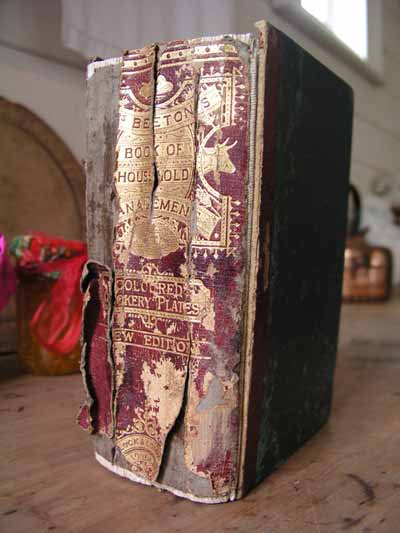
55. AS SECOND IN COMMAND IN THE HOUSE, except in large establishments, where there is a house steward, the housekeeper must consider herself as the immediate representative of her mistress, and bring, to the management of the household, all those qualities of honesty, industry, and vigilance, in the same degree as if she were at the head of her own family. Constantly on the watch to detect any wrong-doing on the part of any of the domestics, she will overlook all that goes on in the house, and will see that every department is thoroughly attended to, and that the servants are comfortable, at the same time that their various duties are properly performed.
Cleanliness, punctuality, order, and method, are essentials in the character of a good housekeeper. Without the first, no household can be said to be well managed. The second is equally all-important; for those who are under the housekeeper will take their “cue” from her; and in the same proportion as punctuality governs her movements, so will it theirs. Order, again, is indispensable; for by it we wish to be understood that “there should be a place for everything, and everything in its place.” Method, too, is most necessary; for when the work is properly contrived, and each part arranged in regular succession, it will be done more quickly and more effectually.
56. A NECESSARY QUALIFICATION FOR A HOUSEKEEPER is, that she should thoroughly understand accounts. She will have to write in her books an accurate registry of all sums paid for any and every purpose, all the current expenses of the house, tradesmen’s bills, and other extraneous matter. As we have mentioned under the head of the Mistress (see 16), a housekeeper’s accounts should be periodically balanced, and examined by the head of the house. Nothing tends more to the satisfaction of both employer and employed, than this arrangement. “Short reckonings make long friends,” stands good in this case, as in others.
It will be found an excellent plan to take an account of every article which comes into the house connected with housekeeping, and is not paid for at the time. The book containing these entries can then be compared with the bills sent in by the various tradesmen, so that any discrepancy can be inquired into and set right. An intelligent housekeeper will, by this means, too, be better able to judge of the average consumption of each article by the household; and if that quantity be, at any time, exceeded, the cause may be discovered and rectified, if it proceed from waste or carelessness.
57. ALTHOUGH IN THE DEPARTMENT OF THE COOK, the housekeeper does not generally much interfere, yet it is necessary that she should possess a good knowledge of the culinary art, as, in many instances, it may be requisite for her to take the superintendence of the kitchen. As a rule, it may be stated, that the housekeeper, in those establishments where there is no house steward or man cook, undertakes the preparation of the confectionary, attends to the preserving and pickling of fruits and vegetables; and, in a general way, to the more difficult branches of the art of cookery.
Much of these arrangements will depend, however, on the qualifications of the cook; for instance, if she be an able artiste, there will be but little necessity for the housekeeper to interfere, except in the already noticed articles of confectionary, &c. On the contrary, if the cook be not so clever an adept in her art, then it will be requisite for the housekeeper to give more of her attention to the business of the kitchen, than in the former case. It will be one of the duties of the housekeeper to attend to the marketing, in the absence of either a house steward or man cook.
58. THE DAILY DUTIES OF A HOUSEKEEPER are regulated, in a great measure, by the extent of the establishment she superintends. She should, however, rise early, and see that all the domestics are duly performing their work, and that everything is progressing satisfactorily for the preparation of the breakfast for the household and family. After breakfast, which, in large establishments, she will take in the “housekeeper’s room” with the lady’s-maid, butler, and valet, and where they will be waited on by the still-room maid, she will, on various days set apart for each purpose, carefully examine the household linen, with a view to its being repaired, or to a further quantity being put in hand to be made; she will also see that the furniture throughout the house is well rubbed and polished; and will, besides, attend to all the necessary details of marketing and ordering goods from the tradesmen.
The housekeeper’s room is generally made use of by the lady’s-maid, butler, and valet, who take there their breakfast, tea, and supper. The lady’s-maid will also use this apartment as a sitting-room, when not engaged with her lady, or with some other duties, which would call her elsewhere. In different establishments, according to their size and the rank of the family, different rules of course prevail. For instance, in the mansions of those of very high rank, and where there is a house steward, there are two distinct tables kept, one in the steward’s room for the principal members of the household, the other in the servants’ hall, for the other domestics. At the steward’s dinner-table, the steward and housekeeper preside; and here, also, are present the lady’s-maid, butler, valet, and head gardener. Should any visitors be staying with the family, their servants, generally the valet and lady’s-maid, will be admitted to the steward’s table.
Smith may be one of the most common names in America, but this Smith family is anything but ordinary. Will Smith is known as "Mr. July" for the box office bucks he rakes in every summer for his blockbuster films. His wife, Jada Pinkett Smith, does it all—she's a singer as well as the star of the TNT series Hawthorne. And together, they're raising three kids—Trey, Jaden and Willow—and have created one of the most talented families in Hollywood.
Will and Jada say they created what they call a marriage business plan early on. "If you don't have a purpose for your relationship, if you don't have a place that you're going, something that you want to accomplish, something that you want to do, you can really get lost in the murk of the journey," Will says. "There has to be a vision. Like, why are we together?"
The tough part is when two independent visions need to come together as one, Jada says. "I had my vision and he had his, so we had to join it," she says. "Once we started to see how the children were growing and, you know, Willow and Jaden and Trey were becoming their own beings we decided, 'Okay, we want to make a family business. How do we incorporate all the talent that we have in this family?' So that's our vision—to create a place where their dreams can come true as well."
A new generation of female bloggers is championing the importance of being a good wife and partner. - Whtiney Friedlander for The Los Angeles Times
Wouldn’t it be easier to stop the juggling act and be a housewife and a helpmate? Wouldn’t it be better for her spouse and children if she were to opt for a more traditional role — full-time wife, full-time mom, full-time writer of thank-you notes — a choice that continues to be embraced by many forces in our culture?
Consider this: Three-quarters of Americans believe both partners should contribute to the household income, according to a Pew Research Center study from October. Meanwhile, only 37% of mothers who work outside the home want to be working full time, that same study reported.
Maybe those women are just tired, stressed out by the complications of everyday life amid a recession. Maybe it’s easier to idealize so-called simpler times (1945 to ‘65 anyone?) amid difficult ones. Or perhaps we should examine the role of pop culture and TV, which has a tendency to clothe domestic life in perfect little cocktail dresses.
After all, the much watched women of Wisteria Lane seem to be more interested in “feminine arts” such as gossiping and scheming than in holding down a corporate gig. The housewives of the Camelot-era “Mad Men” seem to have nothing better to do than mix martinis, look fabulous and inspire a partnership with Banana Republic and a slew of cocktail recipes that are listed on sites such as Oprah.com.
» Don’t miss a thing. Get breaking news alerts delivered to your inbox.
Whatever the source of their inspiration, a small contingent of women are turning to the Internet to champion the importance of being a good wife and partner. Some of their voices are sincere and straightforward. Others toy with the notion of 1950s housewifery, viewing it through a lens that seems clouded with nostalgia. It seems doubtful any of them would endear themselves to the editors of Ms. Magazine, but they have tapped into a longing.
There are bloggers like Kathi Browne, a fortysomething mother of three in Maryville, Tenn., who stopped working in the corporate world after her third child was born and summarizes her philosophy at Wingspouse.com as “an alternative to the traditional career choices some executive spouses are forced to make. Rather than requiring a choice between a career or family, the wingspouse career unites the two — creating a partnership between the executive and the spouse, and leading to mutual success.”
A wingspouse can help analyze an executive’s ideas without fear of reprisals — or theft. A wingspouse might accompany his or her partner to a speaking event and help work the room — or simply stand back and read people to see if the message is getting across. Or provide comfort on the home front. “Another wingspouse shared her secret to making her husband feel settled sooner,” Browne blogged last December. “She hangs the same plaque in the front entrance of every home they move to.”
A wingspouse can be a man or a woman, but Browne acknowledges that she believes she is writing primarily for women.
In the San Diego area, Kelley Lilien, 30, a graphic designer and work-from-home mother of two, lets her inner eccentric housewife run free with MrsLilien.com. Hers is a splashy website with themed posts on perfect picnic outfits and snacks or Grace Kelly tributes, each entry enhanced by a fanciful poem.
Keeping everything tongue-in-cheek, Lilien also extols the virtues of another nuclear family stereotype, the mother’s little helper. She is not afraid to mention booze, pills and retail therapy on her blog. While her alter ego might be the one to show up at your cousin’s wedding in a T-shirt-length magenta kaftan to match her super-sized Cosmopolitan cocktail, the real-life Mrs. Lilien is slightly more subdued, happily affixing her fingers with the cocktail rings her husband gives her each Valentine’s Day, never leaving the house without lipstick and believing that a good dinner party “is just what life’s about.”
And then there’s Taryn Cox, who isn’t afraid to put it all out there, unabashedly writing about stereotypically uxorial topics ranging from themed baby showers and creating her own cocktail-style dresses to the art of ironing a newspaper and how to clean with vodka at a blog she has titled TarynCoxTheWife.com.
Cox’s posts showcase classic glamour and gorgeous parties as songs such as “Sunny Side of the Street” play in the background.
“I’ve always just been so completely fascinated by the idea of marriage and dedication,” says Cox, a trim 26-year-old with a penchant for pastels and an e-mail address that starts with “stepfordwife.”
No, she’s not married and she doesn’t have kids, but “this [blog] is for those dreams and fantasies. I believe my own vision. I believe there’s an art to being a good wife.”
Growing up in Newport Beach as an only child to a single mom, Cox says her enthusiasm for the wife-and-mother role grew when she saw all her elementary school friends getting picked up at the curb when school let out and she was shuttled off to the YMCA for after-school care. Her blog, where the word “wife” is written in capital letters, includes rules for domestic bliss (WIFE rule No. 17: “The perfect WIFE should shave her legs every day or every other day.” WIFE rule No. 14: “The perfect WIFE should have the most beautiful and neat handwriting. This always comes in handy when writing Thank You notes, Addressing Cards, and Sharing Recipes”).
While not blogging, she’s parlayed years of personal assistant gigs for the likes of Lindsay Lohan and Scarlett Johansson into her current position as a domestic assistant and organizer for philanthropist Monica Rosenthal and her husband, TV producer Phil Rosenthal. Cox says it should give her plenty of practice for her planned life, as she helps with grocery shopping, organizing dinner parties and other duties.
Cox says she’s one of the first people her friends call when they get engaged, possibly because of her two giant binders of articles about wedding and party planning.
So, what’s her dating life like? Cox is somewhat mum on that, saying she usually dates only men she meets through mutual friends.
“[But] I’ve always been told I have very high expectations when it comes to dating men, which I always found to be an overexaggerated statement,” Cox says. “I think my expectations are not over the top but should be the norm. I think it’s important for a man to practice opening doors, calling instead of sending a text, putting forth the effort to make plans in advance instead of waiting to the last minute. It shows that he ultimately respects you and your time when paying attention to you and the small details.”
The garment no longer symbolizes women’s relegation to the kitchen but their delight in being there. - Rene Lynch for The Los Angeles Times
Is there another kitchen object that carries as much baggage as the apron?
A whisk and a wooden spoon are, after all, tools to get the job done. But an apron?
For years, aprons were commonplace and worn with pride. But somewhere along the line the apron became shorthand imagery for all that was holding women back, an emblem of humble domesticity and repression. When an apron was required for practical reasons, it certainly wasn’t flaunted. (If your mom was like mine, she’d yank that apron off before answering the front door.) And still today, when a man is too close to his mother, we say he’s tied to her apron strings.
But a growing community of self-proclaimed apronistas is seizing the apron back from such dusty, anachronistic thinking. No longer a symbol of kitchen drudgery, the apron has returned with a vengeance, ushered by a renewed appreciation of all things domestic.
“We don’t have to live by anyone else’s definition of what it means to be a woman, or a mother or a wife, that time is over,” says Cynthia Wadell of Orange, founder of Heavenly Hostess, a line dedicated to upscale aprons and kitchen linens.”You get to decide what that apron means. It’s your choice.”
Of course, it helps that today’s aprons are not just aprons. Forget those unisex, butcher-style, fuddy-duddy aprons. Today’s models — even the workhorse aprons, the ones you actually use to wipe off hands and fend off splatters — are fun. They’re flirty. Sassy. Ironic. Fashion forward. And sexy: Full-length versions not only cover up but also enhance the bustline and play up an hourglass figure with a cinching of the waist.
And yet they don’t take themselves too seriously: The Annie’s Attic online boutique at Etsy has a line of aprons embellished with skulls.
Then there are the hostess and cocktail aprons. You do not — repeat, do not — wipe your hands on these. Not with price tags that can top $100 apiece. Wadell’s aprons, for example, are wearable works of art, ethereal confections made of tulle, organza and luxurious satin, an accessory that polishes off an outfit and sends the message: “I am your hostess. And it’s going to be a great party.”
In other words, it wasn’t that long ago that an apron would be the last thing you’d buy a mom on Mother’s Day. Now it might be just the right thing.
Apronistas say the evolution of the garment mimics the broadest strokes of the women’s movement. Seen as the homemaker’s uniform in a “Leave It to Beaver” kind of way, aprons were ripped off and cast aside as women moved from home and kitchen to the workplace, says Janice Longone, curator of American culinary history at the University of Michigan in Ann Arbor.
When an apron was, by necessity, called for, it was as likely to be one of those utilitarian fabric sheets, easily worn by man or woman — mirroring the desire for equality between the sexes.
But that is lost on later generations who have rediscovered the domestic arts, who unwind after a long hard day with Food Network and Martha Stewart Living magazine. They see no shame in spending the afternoon perfecting their recipes for shortbread or short ribs — and, in fact, they brag about it on their blogs. It was just a matter of time before they decided they wanted to look good doing it too.
The perfect wife knows how to provide the harmonic balance within the family unit. She knows how to balance career, domestic chores, taking care of the children and support her husband emotionally. The perfect wife has many roles to fulfill and finds it both a challenge and rewarding. Not every woman wants to be the perfect wife. Many women will purposely try to be something different to establish their independence. Even those women that rebuff the idea of a perfect wife, read on. There are many deep emotional rewards for striving to be the perfect wife.
The perfect wife knows how to smile at those jokes that aren’t really that funny. She manages a small laugh and doesn’t remind her husband that he has told that joke before repeatedly. Without her husband knowing it, the perfect wife embraces these age old jokes over and over as if they were brand new. The perfect wife will know that one day her husband might be in a nursing home not able to even recognize who she is. It will be that day that these old jokes will be a memory that keeps her going daily to visit her wonderful husband.
The perfect wife finds the energy to pick up the piles of clothes, socks strewn about and the glasses that never make it back to the sink. Instead of clearing up after everyone and feeling like a maid, the perfect wife is proud of her home. It will drive her nuts to have the little messes here and there. She cleans up without a second thought as to who did it last time or why everyone around her can’t seem to walk to the kitchen sink. She knows that one day the house will be childless and there won’t be laughter as everyone is gathered around the TV watching a movie and forgetting their dishes. The perfect wife covets the memories that are being made in the household from an active family life.
The perfect wife wakes in the middle of the night to toss the covers back onto her husband because she wants him to stay warm. She doesn’t sit up and wonder why she had to marry someone that thrashes about and snores so loudly. The perfect wife cherishes the quiet moments when she can watch her husband sleeping peacefully. Deep down she knows that one day her bed will be empty because she has become a widower.
The perfect wife learns how to cook the dishes that are her husband’s favorite to eat. Eventually, she even learns to like some of these dishes herself. When he calls her telling her that he will be late getting home for dinner, the perfect wife smiles and puts the meal on warm. She knows that it is a blessing that she has a man that is willing to work very hard to financially provide for the family. At least her husband is out working late and not at the local bar picking up women or ending up in jail. There will be a day that the only food her husband might be able to eat is puree meals from a straw.
The perfect wife does not look at just today. The perfect wife does not keep score as to who has contributed the most or contributed what to a relationship. She values her marriage and embraces her friendship with her husband. When faced with multi-tasking and keeping the family balance, the perfect wife focuses on enjoying each moment for she is wise and knows that the precious moments of today are not forever. It is from the perfect wife that many of us could learn to cherish today and let yesterday’s problems stay in the past. By: Joyce Priddy
You see the word more and more, but what does it say about what it’s on? Here are tips for fruits and vegetables, dairy and meat, cosmetics, processed foods and cotton and coffee. By Julie Deardorff
Some consumers are more than willing to pay higher prices for organically grown food and other products. But is the extra dollar worth it? The answer may depend upon personal priorities.
By definition, organically grown foods are produced without most conventional pesticides, fertilizers made with synthetic ingredients or sewage sludge. Livestock aren’t given antibiotics or growth hormones. And organic farmers emphasize renewable resources and conservation of soil and water.
The U.S. Department of Agriculture, which runs the National Organic Program, says organic is a “production philosophy,” adding that an organic label does not imply a product is superior. Moreover, some nutrition experts say, there’s no need to eat organic to be healthy: Simply choose less processed food and more fruits and vegetables.
To compare the nutrient density of organically and conventionally grown grapes, researchers would have to have matched pairs of fields, including using the same soil, the same irrigation system, the same level of nitrogen fertilizer and the same stage of ripeness at harvest, acknowledged Charles Benbrook, chief scientist at the Organic Center, a pro-organics research institution.
Last summer, the American Journal of Clinical Nutrition published a comprehensive review concluding that organic and conventional food had comparable nutrient levels.
The study outraged some members of the organic community, who criticized the study for not addressing pesticide residues, a major reason people choose organic. Nor did the study address the effect of farming practices on the environment and personal health.
Maria Rodale, a third-generation advocate for organic farming, urges consumers to look beyond nutrition to the chemicals going into our soil, our food and our bodies. “What we do to our environment, we are also doing to ourselves,” said Rodale, chairwoman and chief executive of Rodale Inc., which publishes health and wellness content.
Here’s a closer look at some of the factors that may influence your decision whether to buy organic products.
Fruits and vegetables
Farmers using conventional practices treat crops with pesticides that protect them from mold, insects and disease but can leave residues. Organic fruits and vegetables have less pesticide residue and lower nitrate levels than do conventional fruits and vegetables, according to a 1996 scientific summary report by the Institute of Food Technologists.
The bottom line: Pesticide residue poses little risk to most consumers, health experts say. But fetuses and children are more vulnerable to the effects of synthetic chemicals, which can be toxic to the brain and nervous system, said Dr. Philip Landrigan, director of the Children’s Environmental Health Center at the Mount Sinai School of Medicine in New York City.
The Environmental Working Group, a public health advocacy organization, recommends buying organically grown peaches, apples, bell peppers, celery, nectarines, strawberries, cherries, kale, lettuce, imported grapes and pears because conventionally grown versions are the most heavily sprayed. Onions, avocados, sweet corn and pineapples have some of the lowest levels of pesticides.
As for nutrition, one French study found that, in some cases, organic plant products have more minerals such as iron and magnesium and more antioxidant polyphenols. But although mounting evidence suggests that soil rich in organic matter produces more nutritious food, “we are never going to be able to say organic is always more nutrient dense; that’s going beyond the science,” said Benbrook of the Organic Center.
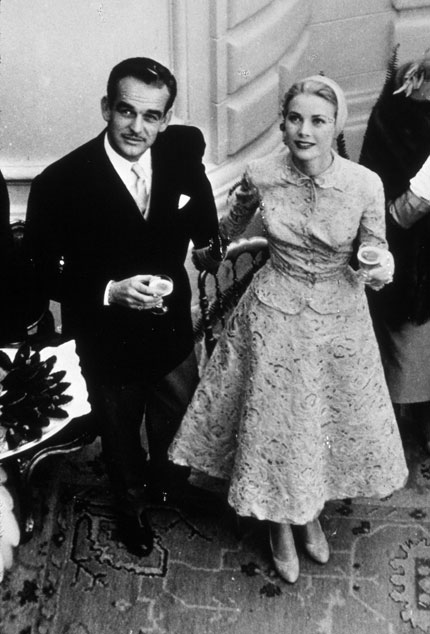
The rare beauty and stunning self-possession that propelled Grace Kelly into the Hollywood pantheon, onto the Best-Dressed List, and ultimately to Monaco’s royal palace were more than captivating—they were completely genuine. As London’s Victoria and Albert Museum unveils an exhibition devoted to Kelly’s style, which still inspires fashion from Hermès to Tommy Hilfiger to Mad Men’s costumer Janie Bryant, the author looks at the intertwined qualities of an icon: white-gloved ingénue, elegant goddess, passionate—and frankly sexual—romantic. By Laura Jacobs
It may be the softest kiss in film history. The sun is setting over West Side rooftops, the sky persimmon. A man, his leg in a cast, sleeps near an open window, undisturbed by a neighbor singing scales. Just after the highest note is reached, a shadow climbs over the man’s chest, shoulder, and chin. We see a face: blue eyes, red lips, skin like poured cream, pearls. Then he sees it. The kiss happens in profile, a slow-motion hallucinatory blur somewhere between myth and dream, a limbic level of consciousness. The director, Alfred Hitchcock, liked to say he got the effect by shaking the camera. In truth, this otherworldly kiss comes to us by way of a double printing. Has any muse in cinema been graced with such a perfect cameo portrait of her power?
“How’s your leg?” she murmurs. “It hurts a little,” Jimmy Stewart answers. Another soft kiss, more teasing questions. “Anything else bothering you?” she asks. “Uh-huh,” he says. “Who are you?”
Who, indeed! In 1954, when Rear Window premiered, Grace Kelly had been in only four films. She was hardly known to the public, and then she was suddenly known—a star. In her first film, Fourteen Hours, she played an innocent bystander, on-screen for two minutes and 14 seconds. In her second, Fred Zinnemann’s High Noon, she co-starred as the pacifist bride of embattled sheriff Gary Cooper. In her third movie, John Ford’sMogambo, she was the prim wife of an anthropologist (Donald Sinden) and Jane to big-game hunter Clark Gable’s Tarzan. It was a steep and impressive learning curve, straight to the top. By the time Hitchcock got his hands on her, figuratively speaking, casting himself as Pygmalion to her Galatea, Grace Kelly was ready for her close-up. Hitchcock gave her one after another, in three films that placed her on a pedestal—Dial M for Murder, Rear Window, and To Catch a Thief—enshrining her as an archetype newly minted. “A snow-covered volcano” was how he put it. She was ladylike yet elemental, suggestive of icy Olympian heights and untouched autonomy yet, beneath it all, unblushing heat and fire. By 1956, two years, six films, and one Academy Award afterRear Window—while the country was still wondering, Who are you, Miss Kelly?—she was gone, off to Europe to marry a prince, whence she would become Her Serene Highness Princess Grace of Monaco.
he appearance and then sudden disappearance of gifted, beautiful blondes is not unknown to Hollywood. Before Grace Kelly’s five-year phase of radiance in the 50s, there was Frances Farmer, whose brilliance roused the industry for six years, from 1936 to 1942. Like Kelly, Farmer was intelligent, her own person, and a serious actress wary of binding contracts. In 1957, only a year after Grace Kelly’s departure, Diane Varsi took the baton, making a big impression as a sensitive ingénue inPeyton Place. Varsi, too, was both smart and skeptical of Hollywood, and fled the industry in 1959. (She returned in the late 60s, but without momentum.) Farmer and Varsi left, respectively, in mental and emotional disarray. The word “disarray,” however, would never find its way into a sentence that included the name Grace Kelly. She was always in control. Always prepared. Always well groomed and well mannered, delightful and kind. And always, eternally it seems, beautiful.
Though it is in Rear Window where Grace Kelly achieves full iconic stature, answering Stewart’s question by circling the room in her pure-white snowcap of a skirt, there is nothing “rear window” about her. She states her full name as she switches on three lights, and her picture-window, Park Avenue perfection is itself a kind of incandescence. Here was a white-glove glow to make men gallant and women swoon, and it was present whether she was dressed in dowdy daywear (her beloved wool skirts and cashmere cardigans) or in the confections of Hollywood designers and Paris couturiers. Hitchcock goes so far as to make a joke of it. “She’s too perfect,” Jimmy Stewart complains. “She’s too talented. She’s too beautiful. She’s too sophisticated. She’s too everything but what I want.” And it was true, except for that last, because at the moment when Miss Kelly left Hollywood the whole world wanted her.
I’ve been slightly enthralled with this book since discovering an antique copy in London. Isabel Beeton if you will was the Martha Stewart/Emily Post of her time. She published “Mrs. Beeton’s household management” in the late 1800’s, which was essentially a 1,112 page guide to properly caring for and running a Victorian home. Filled with everything from fashion, childcare, recipes and management of the help. Continue reading for the complete first chapter. - THE WIFE
Chapter One: The Mistress (Old fashion term for Lady of The House)
1. AS WITH THE COMMANDER OF AN ARMY, or the leader of any enterprise, so is it with the mistress of a house. Her spirit will be seen through the whole establishment; and just in proportion as she performs her duties intelligently and thoroughly, so will her domestics follow in her path. Of all those acquirements, which more particularly belong to the feminine character, there are none which take a higher rank, in our estimation, than such as enter into a knowledge of household duties; for on these are perpetually dependent the happiness, comfort, and well-being of a family. In this opinion we are borne out by the author of “The Vicar of Wakefield,” who says: “The modest virgin, the prudent wife, and the careful matron, are much more serviceable in life than petticoated philosophers, blustering heroines, or virago queens. She who makes her husband and her children happy, who reclaims the one from vice and trains up the other to virtue, is a much greater character than ladies described in romances, whose whole occupation is to murder mankind with shafts from their quiver, or their eyes.”
2. PURSUING THIS PICTURE, we may add, that to be a good housewife does not necessarily imply an abandonment of proper pleasures or amusing recreation; and we think it the more necessary to express this, as the performance of the duties of a mistress may, to some minds, perhaps seem to be incompatible with the enjoyment of life. Let us, however, now proceed to describe some of those home qualities and virtues which are necessary to the proper management of a Household, and then point out the plan which may be the most profitably pursued for the daily regulation of its affairs.
3. EARLY RISING IS ONE OF THE MOST ESSENTIAL QUALITIES which enter into good Household Management, as it is not only the parent of health, but of innumerable other advantages. Indeed, when a mistress is an early riser, it is almost certain that her house will be orderly and well-managed. On the contrary, if she remain in bed till a late hour, then the domestics, who, as we have before observed, invariably partake somewhat of their mistress’s character, will surely become sluggards. To self-indulgence all are more or less disposed, and it is not to be expected that servants are freer from this fault than the heads of houses. The great Lord Chatham thus gave his advice in reference to this subject:—“I would have inscribed on the curtains of your bed, and the walls of your chamber, ‘If you do not rise early, you can make progress in nothing.’”
4. CLEANLINESS IS ALSO INDISPENSABLE TO HEALTH, and must be studied both in regard to the person and the house, and all that it contains. Cold or tepid baths should be employed every morning, unless, on account of illness or other circumstances, they should be deemed objectionable. The bathing of children will be treated of under the head of “MANAGEMENT OF CHILDREN.”
5. FRUGALITY AND ECONOMY ARE HOME VIRTUES, without which no household can prosper. Dr. Johnson says: “Frugality may be termed the daughter of Prudence, the sister of Temperance, and the parent of Liberty. He that is extravagant will quickly become poor, and poverty will enforce dependence and invite corruption.” The necessity of practising economy should be evident to every one, whether in the possession of an income no more than sufficient for a family’s requirements, or of a large fortune, which puts financial adversity out of the question. We must always remember that it is a great merit in housekeeping to manage a little well. “He is a good waggoner,” says Bishop Hall, “that can turn in a little room. To live well in abundance is the praise of the estate, not of the person. I will study more how to give a good account of my little, than how to make it more.” In this there is true wisdom, and it may be added, that those who can manage a little well, are most likely to succeed in their management of larger matters. Economy and frugality must never, however, be allowed to degenerate into parsimony and meanness.
This is a great article that was posted in The New York Times. I would like to thank Erika for sharing with me! - THE WIFE
I am stricken with the peculiar curse of being a 21st-century woman who makes more than the man she’s living with — first with a husband for 13 years and now with a new partner. It’s an increasingly common situation, according to a recent Pew study that found that the proportion of American marriages in which the wife makes more money rose to 22 percent in 2007 from 4 percent in 1970.
I don’t know how it’s going for my sisters, but as my 40s and Verizon bills and mortgage payments roll on, I seem to have an ever more recurring 1950s housewife fantasy. In this magical Technicolor world, the breadwinner husband, Brad, leaves home (where his duties are limited to mowing the lawn and various minor home repairs) at 7 a.m. When he returns from work at 6 p.m., aside from a savory roast with mashed potatoes, his homemaker wife, Nancy, has pipe, slippers and a tray of Manhattans ready.
The couple sink into easy chairs and get pleasantly soused while Brad recounts his workday battles. Through a dreamy mixed-bourbon haze, Nancy makes gentle cooing sounds like “Ah!” and “Oh!” and “Did the central manager really say that in the meeting? They don’t appreciate all the hard work you do! Oh, Brad!”
Nancy has her active-listener face on for several reasons. One is that her 1950s housewife day (stay with me, I admitted this was a fantasy) was an agreeable roundelay of kitchen puttering and grocery shopping and, once home, the placing of those comestibles in the icebox via the precise — or charmingly imprecise — geometry Nancy favors. She jokes that Brad, poor dear, couldn’t find the icebox if you asked him!
Aside from that, there was a leisurely trip to the hair salon, a spot of tennis and a lively game of bridge, where the girls shared tips on the making of this very roast. If there are children, let us say first they are in school, then afterward they ride their bikes freely around the neighborhood, settling their own disputes and devising their own entertainments. (Here we invoke the curious statistic that working mothers today spend about the same number of hours per week with their children as stay-at-home moms did four decades earlier.)
The point is that Nancy arrives at the end of her day so fully socialized with, she is ready to glaze over amiably during her husband’s evening Work Monologue, and perhaps even later, during their customary five minutes of intimate relations. Being mistress of her own domain much as Brad is master of his, Nancy enjoys total domestic authority and the job satisfaction that comes with it. Even more important, as Brad unambiguously earns all the money, Nancy has the relational contract of sheer gratitude to pull on, due to his clearly measurable value. If the mortgage weren’t paid, Nancy would have to live in the same house as, God forbid, her mother! By contrast, Brad is relatively low maintenance.
Fast forward to 2010. When husbands and wives not only co-work but try to co-homemake, as post-feminist and well-intentioned as it is, out goes the clear delineation of spheres, out goes the calm of unquestioned authority, and of course out goes the gratitude.
Aside from the irritation of never being able to reach the spatula (men tend to place items on shelves that are a foot higher than women can manage), I have found co-homemaking inefficient. With 21st-century technology, it’s a straightforward matter to run a modern home. Sheep don’t need to be sheared; the wash is not done on a board by the creek; nothing needs canning, because we have Costco. Even someone who works 40 hours a week can keep a home standing, and food in the fridge, by himself.
What can turn into a second shift is not just negotiating the splitting of this labor with another person, but the splitting of decision-making authority. Two co-workers in the home also have the opportunity to regularly evaluate each other’s handiwork, not always to a positive effect. (Suffice it to say, stacking food in the fridge with precise geometric elegance is apparently not among my talents.)
In short, as the Tupperware totters lopsidedly about, in the domestic equation, the work I do at home is no longer a gift, but the labor of a mediocre colleague whose performance could be better.
Still, a return to a life more like the 1950s, with one breadwinner and one homemaker, is an unreasonable expectation. It is particularly so since, as the breadwinner, I wish to be the husband, and hence what I’m looking for is a wife — a loyal helpmeet who keeps the home fires burning and offers uncritical emotional support when I, the gladiator, return exhausted from the arena. Who are the (actively listening!) men without money who can adapt to such a role?
One could ask, who are the modern women who are content with such a role? These are times when mothers with newborns watch “Oprah” episodes that feature a harried mom just like you who became entrepreneurial with her jam, and is now head of a multimillion-dollar company in addition to being a great mom!
In the end, we all want a wife. But the home has become increasingly invaded by the ethos of work, work, work, with twin sets of external clocks imposed on a household’s natural rhythms. And in the transformation of men and women into domestic co-laborers, the Art of the Wife is fast disappearing.
So in the meantime, I may need to settle for a man who can simply make a decent tray of Manhattans and, while you’re at it, pussycat, make mine a double. - THE NEW YORK TIMES
Sandra Tsing Loh, a contributing editor for The Atlantic and the host of the KPCC radio program “The Loh Down on Science,” is the author of “Mother on Fire.”
This is one of my very very favorite articles I’ve come to find in my monthly favorite, Vanity Fair. The article goes through the entire history of Haute Couture… How it used to be in the good ol’ days and how its transformed to what it has become today. Although the article is quite lengthly, any girl who flaunts her femininity and appreciates the art of a well made gown will just adore the following read. I’ve highlighted some of my favorite parts in what other color then…pink! - THE WIFE
With the house of Lacroix filing for bankruptcy, and Yves Saint Laurent gone, some fear that haute couture is finished. But Paris’s fashion phoenix has survived world war, cultural revolution, and economic meltdown, reshaped to fit the times. Tracing its lineage—Worth, Poiret, Chanel, Dior, and onward—the author describes the current incarnation: spectacular shows accessible to millions on the Internet and a new global client base in the Middle East, India, and China.
By AMY FINE COLLINS
Every 10 years, The New York Times declared in 1965, as the youthquake shook the planet, “The doctors assemble at the bedside of French haute couture and
announce that death is imminent.” There was reason to call the undertaker; sex kitten Brigitte Bardot had rebuffed the venerable Coco Chanel’s proposal to transform her into an “elegant woman” (“Haute couture is for grannies,” the starlet said), and space-ager André Courrèges had just hung up his couturier’s scissors to mass-produce his “moon-maiden” go-go boots and minis.
Earlier, in 1945, Diana Vreeland had implored an assistant to bring back a fabric rose from Paris, as post-diluvian proof that couture had survived World War II. And again in 1973, when Vreeland mounted her elegiac Balenciaga retrospective at the Metropolitan Museum of Art, Time’s diagnosticians determined that haute couture, a moribund institution, was “breathing very hard.” Now, with the revered maison of Lacroix having filed for bankruptcy protection, the death knell is being sounded once again. “Personally,” says Hubert de Givenchy, “I do not see a future for haute couture as I knew it. Haute couture means for me perfection.”
But perhaps the reports of haute couture’s demise are once again greatly exaggerated. At the end of January, reversing the direction of the plummeting stock market, the two grandest fashion houses in Paris, Chanel and Dior, were posting sales increases of 20 and 35 percent, respectively. Even as a mass was held to commemorate the one-year anniversary of Yves Saint Laurent’s passing (the official end of fashion, according to his partner, Pierre Bergé), a new name, Alexandre Matthieu, burst onto the lineup for the fall-winter haute couture shows. “Haute couture is still the best way for a designer to get noticed,” argues a Paris insider. “If you show during ready-to-wear, you’re one among a hundred, crowded into a nine-day week. During the couture shows, you are one among only 20, spread over just three days.”
What is this Persephone-like phenomenon called haute couture, which cyclically dies only to be reborn?“According to the bylaws of the Chambre Syndicale de la Haute Couture, a division of the French Ministry of Industry, an haute couturier is a designer who presides over the creation of hand-finished made-to-order clothing, in a “laboratory” that employs at least 20 workers in Paris. The haute couturier must present a minimum of 25 ensembles twice a year, in January and July, and construct a garment over the course of several fittings, directly on a client’s body or on a dress form replicating her physique”.(Hubert de Givenchy, for example, had a dummy built for Audrey Hepburn, whose 31½-22-31½ shape never varied.) From a peak of 200 before World War II, only 11 authentic haute couturiers remain; additionally, there are four correspondent members. (Giorgio Armani joined as one in 2004.) Just two Americans have ever been classified as haute couturiers—Mainbocher (retired 1971) and Ralph Rucci, who was accepted as a guest member in 2002. (After five years and 10 collections, a guest may advance to full membership.) “If someone is simply a couturier,” explains a Parisian expert, “all that means is that you are sewing.” And, the Parisian adds, if a dressmaker uses the term “haute couturier” without the Chambre Syndicale’s sanction, “he can be arrested.”
The origins of haute couture—an appellation contrôlée, or trademarked name, like “champagne,” and “equally a part of our DNA,” says one French fashion professional—date back to Louis XIV, whose finance minister Jean-Baptiste Colbert established France in the 1660s as the leading manufacturer of silk and other luxury items.
How To Be a Good Wife
Home Economics High School Text Book,1954
Have dinner ready. Plan ahead, even the night before, to have a delicious meal, on time. This is a way of letting him know that you have been thinking about him and are concerned about his needs. Most men are hungry when they come home and the prospect of a good meal are part of the warm welcome needed.
Prepare yourself. Take 15 minutes to rest so that you’ll be refreshed when he arrives. Touch up your makeup, put a ribbon in your hair and be fresh-looking. He has just been with a lot of work-weary people. Be a little gay and a little more interesting. His boring day may need a lift.
Clear away the clutter. Make one last trip through the main part of the home just before your husband arrives, gather up schoolbooks, toys, paper, etc. Then run a dust cloth over the tables. Your husband will feel he has reached a haven of rest and order, and it will give you a lift, too.
Prepare the children. Take a few minutes to wash the children’s hands and faces (if they are small), comb their hair, and if necessary change their clothes. They are little treasures and he would like to see them playing the part.
Minimize all noise. At the time of his arrival, eliminate all noise of the washer, dryer, dishwasher, or vacuum. Try to encourage the children to be quiet. Be happy to see him. Greet him with a warm smile and be glad he is home.
Some don’ts: Don’t greet him with problems or complaints. Don’t complain if he is late for dinner. Count this as minor compared with what he might have gone through that day. Make him comfortable. Have him lean back in a comfortable chair or suggest he lie down in the bedroom. Have a cool or warm drink ready for him. Arrange his pillow and offer to take off his shoes. Speak in a low, soft, soothing and pleasant voice. Allow him to relax and unwind.
Listen to him. You may have a dozen things to tell him, but the moment of his arrival is not the time. Let him talk first.
Make the evening his. Never complain if he does not take you out to dinner or to other places of entertainment. Instead, try to understand his world of strain and pressure, his need to be home and relax.
The Goal: Try to make your home a place of peace and order where your husband can renew himself in body and spirit.
Here is the Music Player. You need to installl flash player to show this cool thing!
THE WIFE
"THE WIFE" is for the timeless wife or elegant wife to be. Whether THE WIFE favors a career working in the corporate world or has dedicated her time and efforts as a housewife, She always maintains a happy and healthy family. THE WIFE is an astounding women and amazing mother, who proudly makes time for her husband and children. THE WIFE loves to cook, has a passion for party planning, a fondness for etiquette, adores decorating and keeping a beautiful home and of course dressing the part. THE WIFE cares about being "green" and takes the time to make her home environmentally friendly. Finally THE WIFE dedicates her spare time to charitable causes and giving back to her community. Women who might inspire THE WIFE would be: Jacqueline Kennedy, Michelle Obama, Grace Kelly, Gwyneth Paltrow, Jenna lyons and Carolina Herrera.
Grammar Warning: I am clearly aware that my grammar is sub par. Please excuse any typos or misspelt words you may come across when reading this blog. There is not need to write or notify me. Thank You Kindly.